Detailed Introduction of Single-Screw Extrusion Puffing Machine

Published:2026-07-18

Detailed introduction to single-screw extrusion puffing machines covers process, selection, and operational management issues related to food processing and production equipment.The actual solution should be confirmed based on raw material characteristics, target product specifications, production scale, and on-site conditions, and should not be determined solely by the parameters of a single piece of equipment.

Key Points for Detailed Introduction of Single-Screw Extrusion Puffing Machine

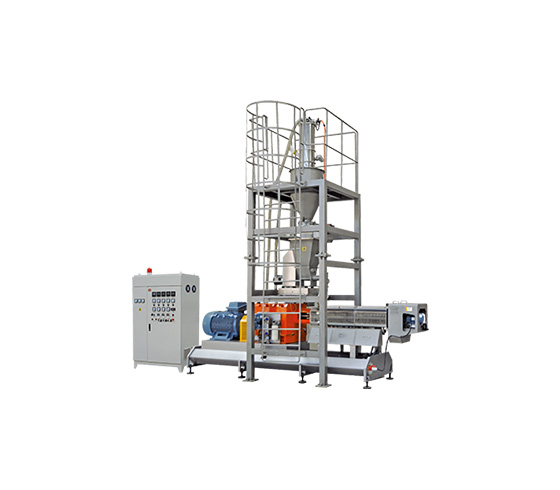
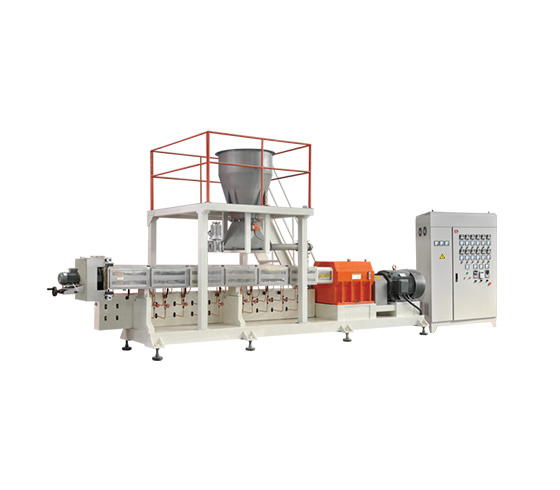
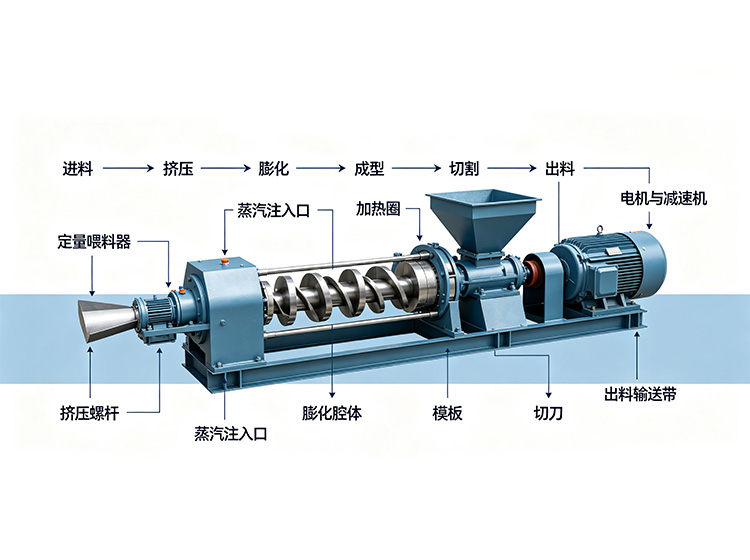
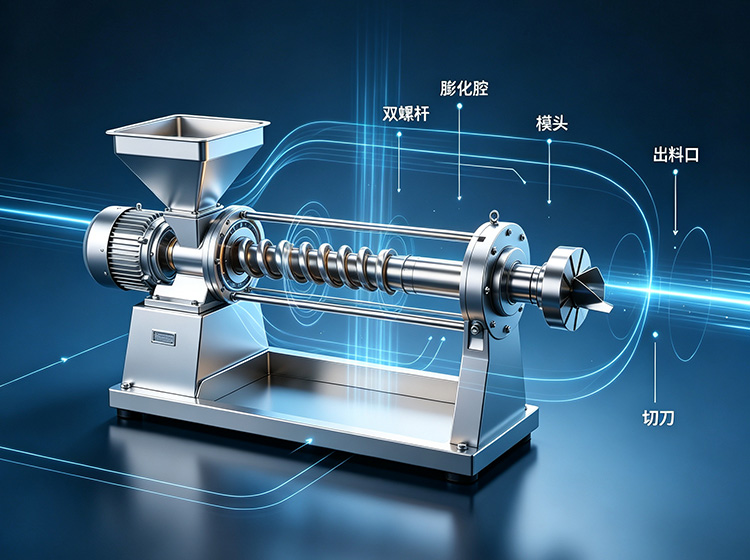
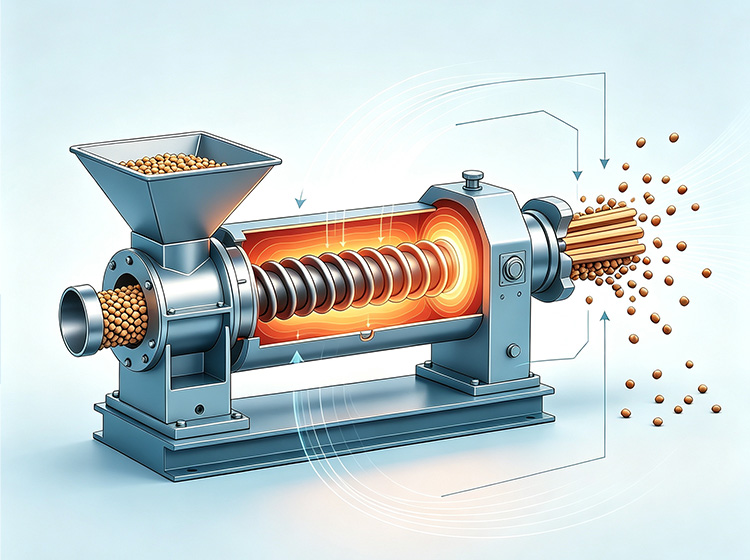
The barrel of the single-screw extrusion puffing machine contains only one screw, which conveys the material and builds up a certain pressure by relying on the friction generated between the screw and the barrel.Typically, the coefficient of friction between the material and the barrel must be greater than that between the material and the screw.Otherwise, the material will wrap around the screw and rotate with it, failing to provide forward propulsion.

The screw is divided into three sections: the feed conveying section, the compression and melting section, and the metering and homogenizing section.In the feeding conveying section, the material enters the machine from the hopper and is conveyed forward along the screw channel as the screw rotates.Upon entering the compression and melting section, the material temperature rises and begins to melt, ultimately reaching complete melting, due to the action of the screw structure, external heating of the barrel, and the intense mixing, stirring, and shearing effects exerted by the screw and barrel on the material.As the screw channel space further decreases, the material is heated and its temperature rises, while the pressure also increases.For food raw materials, a series of complex biochemical reactions occur during this process, such as starch gelatinization, fat and protein denaturation, and further homogenization of the structure. Ultimately, the material is extruded uniformly through the die channel in a quantified and constant-pressure state. This stage is known as the metering and homogenizing section.

What conditions should be considered during implementation or selection?

First, it is essential to clarify the product type, raw material state, formulation direction, and expected finished product requirements.For projects involving extrusion, forming, drying, frying, conveying, seasoning, or packaging, the processing capacity and cycle time of each stage must be matched to avoid discrepancies between individual equipment capacity and the overall line requirements.

Secondly, the installation plan should be evaluated in conjunction with the workshop's spatial layout and utility conditions, including power supply, water supply, steam, or gas.Equipment configuration should also take into account long-term operational factors such as cleaning, maintenance, safety protection, spare parts supply, and operator training.Any process or equipment capabilities mentioned in this document are for reference only in the context of solution discussions and preliminary assessments.Specific model numbers, power ratings, production capacities, temperatures, and times shall be subject to the official technical proposal and the results of trial runs or on-site verification.

Frequently Asked Questions

Can the equipment be determined directly based on the standard configuration?

Not recommended.The equipment configuration is influenced by different raw materials, product structures, target production capacities, and downstream processes.It is more prudent to confirm the product and process conditions before proceeding with the configuration assessment.

How to obtain more targeted advice?

It is recommended to prepare product images or sample information, raw material and formulation guidelines, target production capacity, existing workshop conditions, and planned downstream equipment configurations.Dayi Machinery can further discuss the applicable process routes and equipment configuration options based on this.

This article is compiled based on the "Detailed Introduction of Single-Screw Extrusion Puffing Machine" provided by Dayi Machinery, with the aim of helping readers understand the relevant topics.For technical requirements related to specific projects, please refer to the actual product documentation and engineering confirmation results.