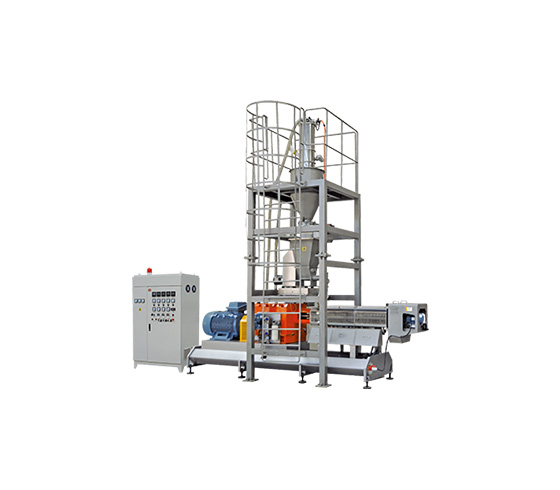
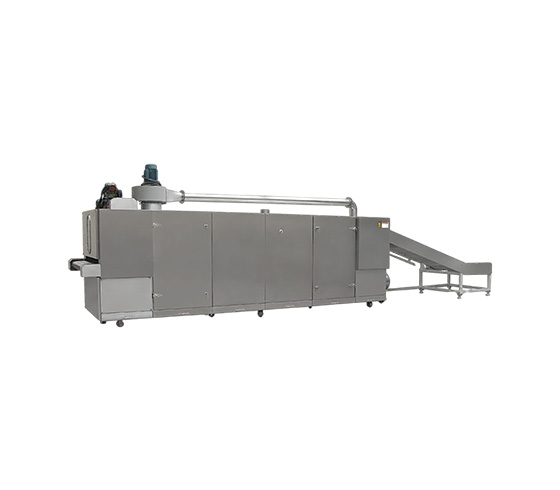
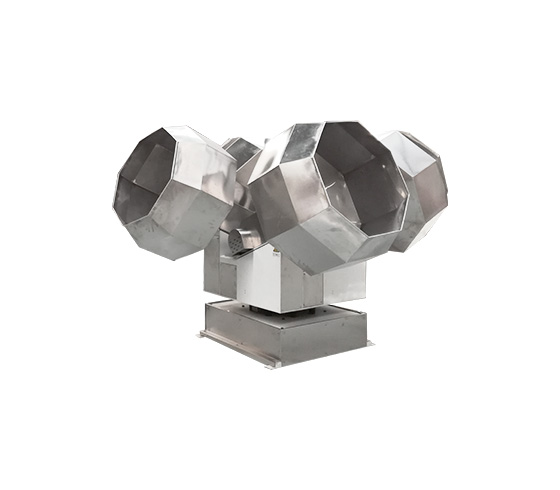
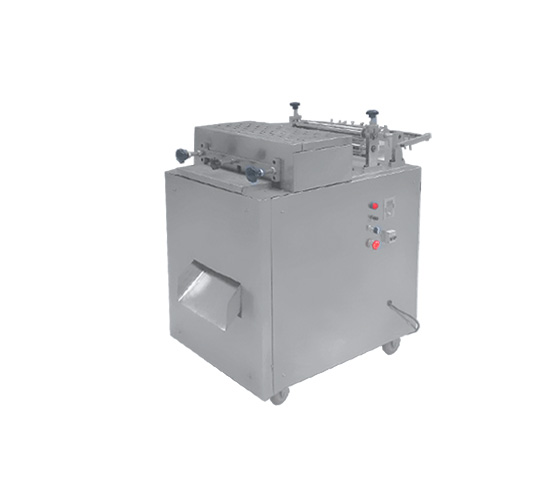
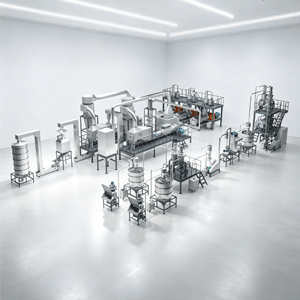
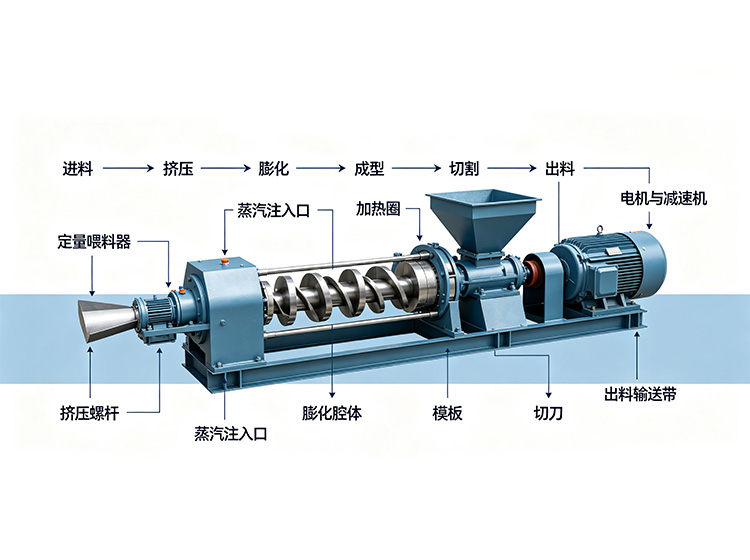
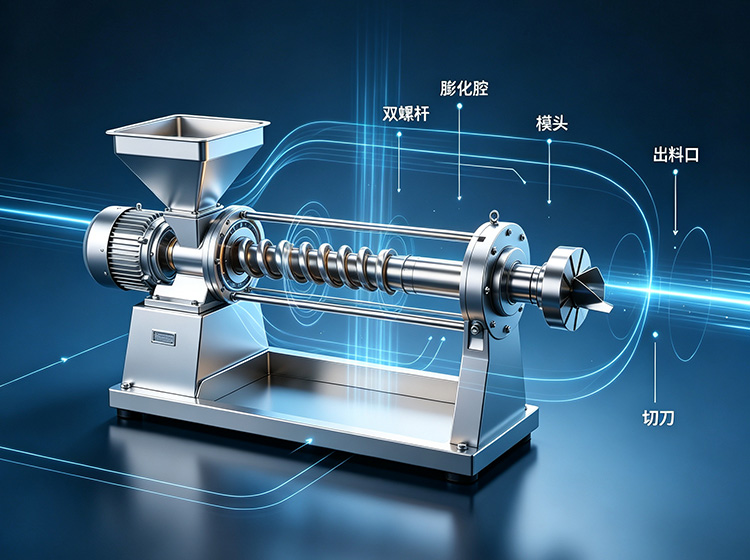
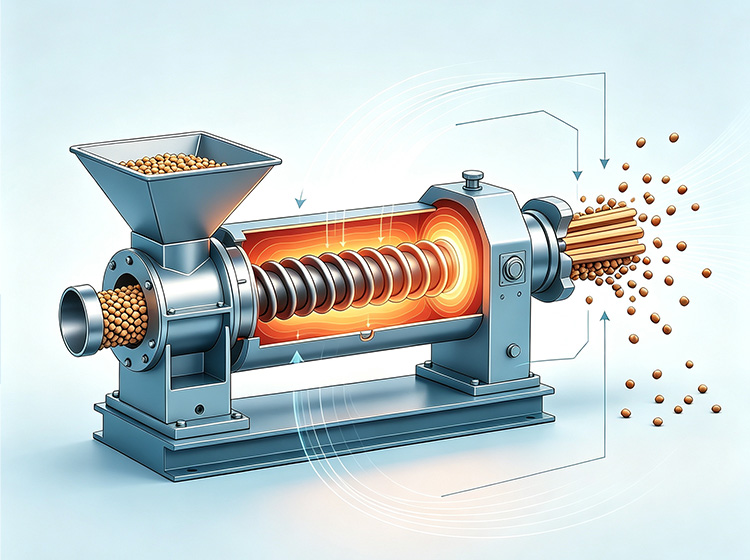
The purchasing guide for large-scale pneumatic puffing machines addresses issues related to the process, equipment selection, and operational management of food processing and production equipment.The actual solution should be confirmed based on raw material characteristics, target product specifications, production scale, and on-site conditions, and should not be determined solely by the parameters of a single piece of equipment.
Key Points for Selecting Large-Scale Airflow Extruders
When purchasing large-scale pneumatic puffing machines, enterprises should pay close attention to the following key considerations:
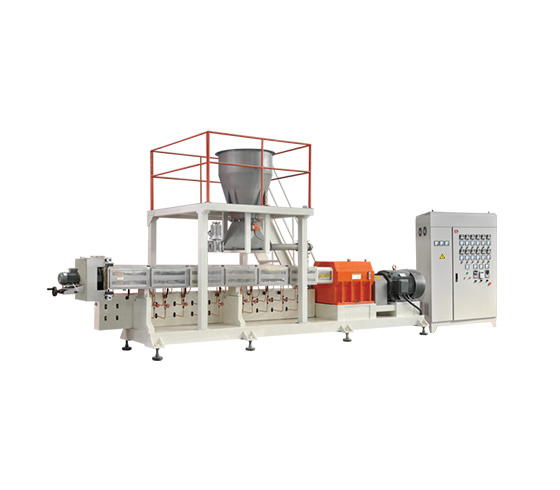
It is essential to verify whether the manufacturer possesses the necessary production conditions, equipment, design and manufacturing capabilities, as well as equipment inspection reports and producer qualification documents issued by relevant national authorities.2. Check whether the expansion tank (including the tank ears) is integrally cast.The safety of non-disposable steel casting components cannot be guaranteed.If a steel plate welded structure is used, it completely lacks safety and cannot be used for the long-term extrusion production of high-pressure materials such as wheat.3. The pneumatic shock absorption system is crucial.To reduce costs, some manufacturers do not install shock-absorbing guide devices beneath the equipment, which fails to provide adequate protection for the main unit and its components.4. Require the manufacturer to clearly specify the scope and duration of after-sales service.If a business license and corporate identity proof cannot be provided, after-sales service will not be guaranteed.5. Verify whether the equipment has been adopted by large-scale production enterprises and is operating effectively.Selling one or two units sporadically is relatively easy, but whether bulk procurement can be achieved is the key test of quality assurance capability.
What conditions should be considered during implementation or selection?
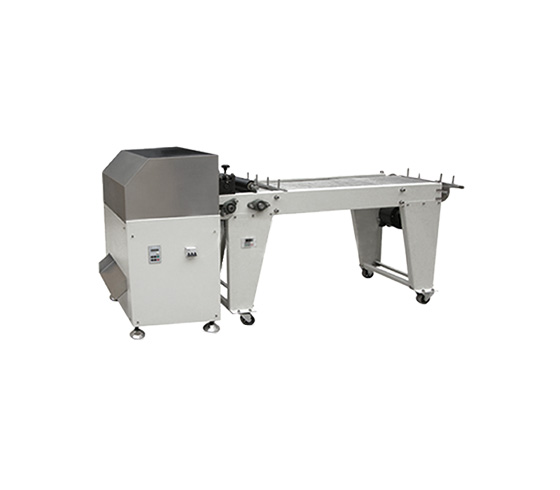
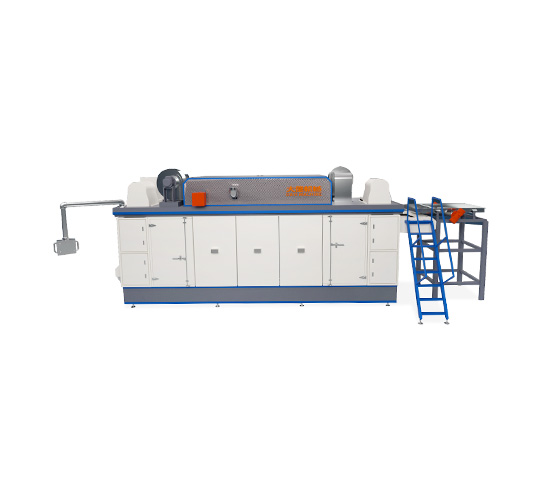
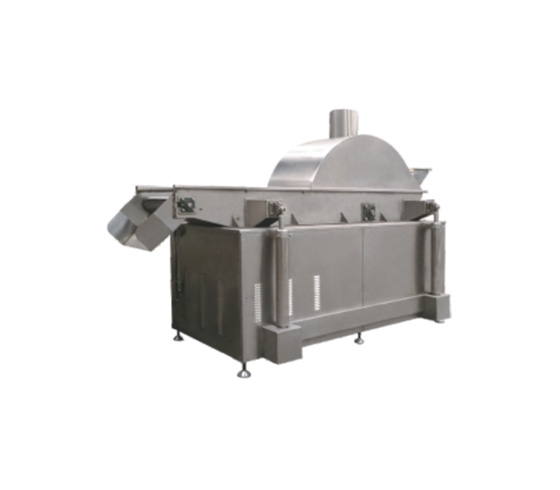
First, it is essential to clarify the product type, raw material state, formulation direction, and expected finished product requirements.For projects involving extrusion, forming, drying, frying, conveying, seasoning, or packaging, the processing capacity and cycle time of each stage must be matched to avoid discrepancies between individual equipment capacity and the overall line requirements.
Secondly, the installation plan should be evaluated in conjunction with the workshop's spatial layout and utility conditions, including power supply, water supply, steam, or gas.Equipment configuration should also take into account long-term operational factors such as cleaning, maintenance, safety protection, spare parts supply, and operator training.Any process or equipment capabilities mentioned in this document are for reference only in the context of solution discussions and preliminary assessments.Specific model numbers, power ratings, production capacities, temperatures, and times shall be subject to the official technical proposal and the results of trial runs or on-site verification.
Frequently Asked Questions
Can the equipment be determined directly based on the standard configuration?
Not recommended.The equipment configuration is influenced by different raw materials, product structures, target production capacities, and downstream processes.It is more prudent to confirm the product and process conditions before proceeding with the configuration assessment.
How to obtain more targeted advice?
It is recommended to prepare product images or sample information, raw material and formulation guidelines, target production capacity, existing workshop conditions, and planned downstream equipment configurations.Dayi Machinery can further discuss the applicable process routes and equipment configuration options based on this.
This article is compiled based on the "Guide to Purchasing Large Airflow Extruders" provided by Dayi Machinery, with the aim of helping readers understand the relevant topics.For technical requirements related to specific projects, please refer to the actual product documentation and engineering confirmation results.