Why Use Roller Conveyors in Food Production Lines

Published:2026-07-18

The reasons for selecting roller conveyors as conveying equipment in food production lines involve process, selection, or operational management issues related to food processing and production equipment.The actual solution should be confirmed based on raw material characteristics, target product specifications, production scale, and on-site conditions, and should not be determined solely by single equipment parameters.

Key Reasons for Selecting Roller Conveyors as the Conveying Equipment in Food Production Lines

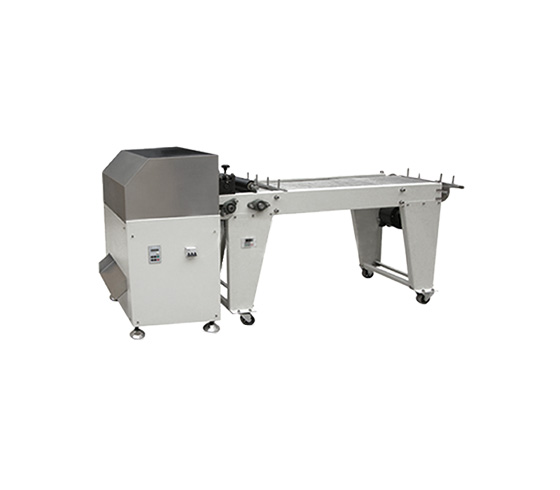
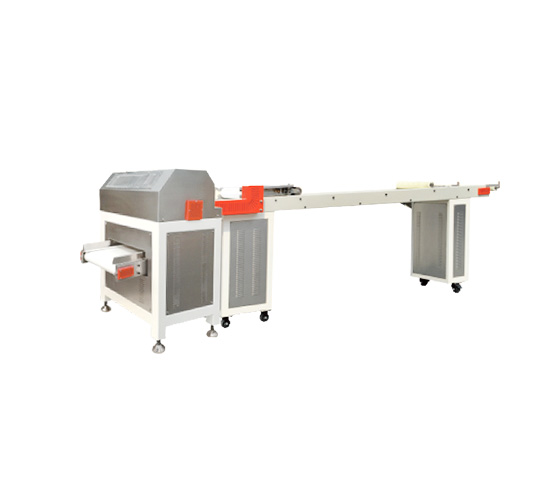
What is a roller assembly line?As the name suggests, it uses roller conveyors as the driving mechanism for the entire assembly line, capable of transporting flat-bottomed items along horizontal or slightly inclined angles.For sheet metal parts, non-flat-bottomed items, or flexible items, conveyance can be achieved using trays or other flat-bottomed containers.

Why choose roller conveyors as the drive mechanism for assembly lines?The reasons are as follows:

Application Scope of Roller Machines

Roller conveyors are suitable for conveying tasks involving various types of boxes, pallets, and packages.For small items, bulk materials, and irregularly shaped items that cannot be conveyed directly, they must be placed on pallets or in boxes for conveying.

The roller conveyor has a high load-bearing capacity, capable of transporting materials with a large single-piece weight or withstanding significant impact loads.

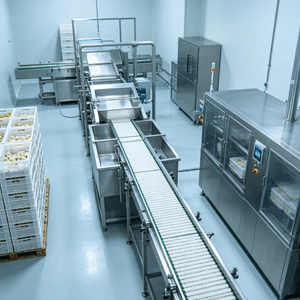
This assembly line is widely used in the home appliances, machinery, food, and electrical equipment industries for object assembly, inspection, debugging, packaging, and conveying.

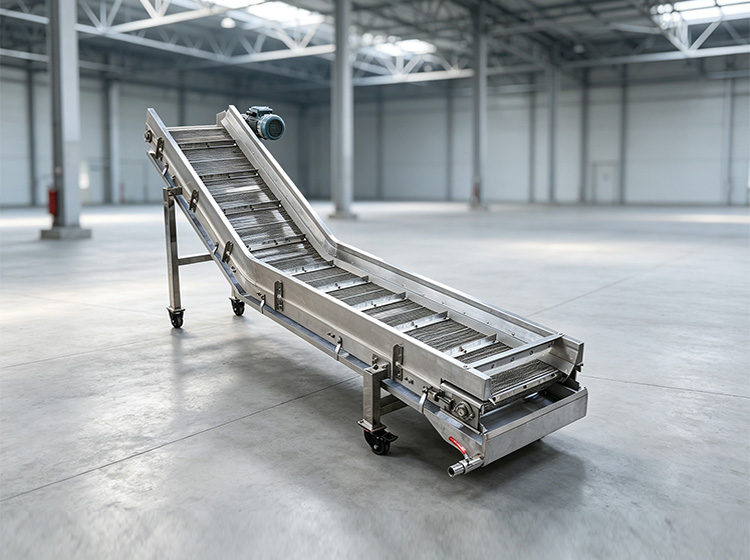
The conveying method of the assembly line can be selected according to process requirements, including various control modes such as normal continuous operation, paced operation, and variable-speed operation;The production line layout can also be selected in various forms, such as straight, inclined, and curved, according to the on-site terrain.

Roller conveyors are commonly used in systems for object detection, sorting, and packaging, and are mainly categorized into non-powered rollers, powered rollers, accumulation rollers, and electrically driven rollers.

Due to special constraints such as corrosiveness, low temperatures, or the need to maintain high temperatures for certain materials, the required materials for roller conveyors vary depending on their intended applications and specific scenarios. These materials can be categorized as stainless steel, engineering plastics, aluminum alloy, and carbon steel.Roller surface treatments include materials such as galvanizing, chrome plating, thermoplastic, polyurethane, and cast rubber.Therefore, compared with other conveyor lines, roller assembly lines feature a simple structure, reliable operation, easy maintenance, and energy-saving and cost-effective performance.Its most prominent advantage lies in its seamless integration with production processes and its diverse functionality.

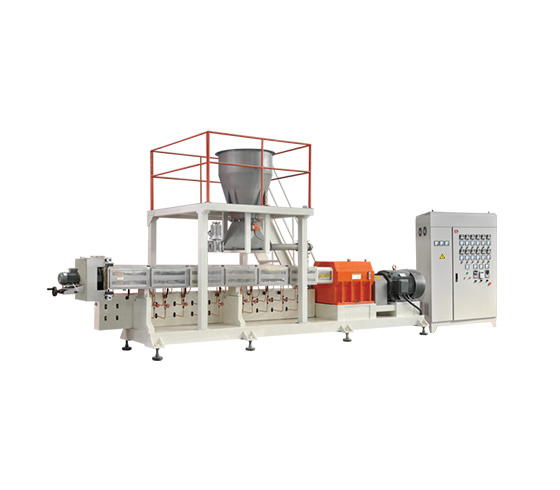
Subject: Reasons for Selecting Roller Conveyors as Conveying Equipment in Food Production LinesTextured Protein and Organized Protein Production Line: In summary, this is why roller conveyors are selected as the conveying equipment for the assembly line.

What conditions should be considered during implementation or selection?

First, it is essential to clarify the product type, raw material state, formulation direction, and expected finished product requirements.For projects involving extrusion, forming, drying, frying, conveying, seasoning, or packaging, the processing capacity and cycle time of each stage must be matched to avoid discrepancies between individual equipment capacity and the overall line requirements.

Secondly, the installation plan should be evaluated in conjunction with the workshop's spatial layout and utility conditions, including power supply, water supply, steam, or gas.Equipment configuration should also take into account long-term operational factors such as cleaning, maintenance, safety protection, spare parts supply, and operator training.Any process or equipment capabilities mentioned in this document are for reference only in the context of solution discussions and preliminary assessments.Specific model numbers, power ratings, production capacities, temperatures, and times shall be subject to the formal technical proposal and the results of trial runs or on-site verification.

Frequently Asked Questions

Can the equipment be determined directly based on the standard configuration?

Not recommended.Different raw materials, product structures, target production capacities, and downstream processes can affect the equipment configuration.It is more prudent to confirm the product and process conditions before proceeding with the configuration assessment.

How to obtain more targeted advice?

It is recommended to prepare product images or sample information, raw material and formulation guidelines, target production capacity, existing workshop conditions, and planned downstream equipment configurations.Dayi Machinery can further discuss the applicable process routes and equipment configuration options based on this.

This article is compiled based on the document "Reasons for Selecting Roller Conveyors as Conveying Equipment in Food Production Lines" provided by Dayi Machinery, with the aim of helping readers understand the relevant topics.For technical requirements related to specific projects, please refer to the actual product documentation and engineering confirmation results.