Food Conveyor Belt Breakage Repair Methods

Published:2026-07-18

Food conveyor belt breakage repair methods involve issues related to food processing and production equipment processes, selection, or operational management.The actual solution must be confirmed based on raw material characteristics, target product, production scale, and site conditions—not solely on the parameters of a single piece of equipment.

Core Points for Repairing Broken Food Conveyor Belts

How to resolve sudden conveyor belt breakage caused by unexpected failures between production lines during food production line equipment operation?

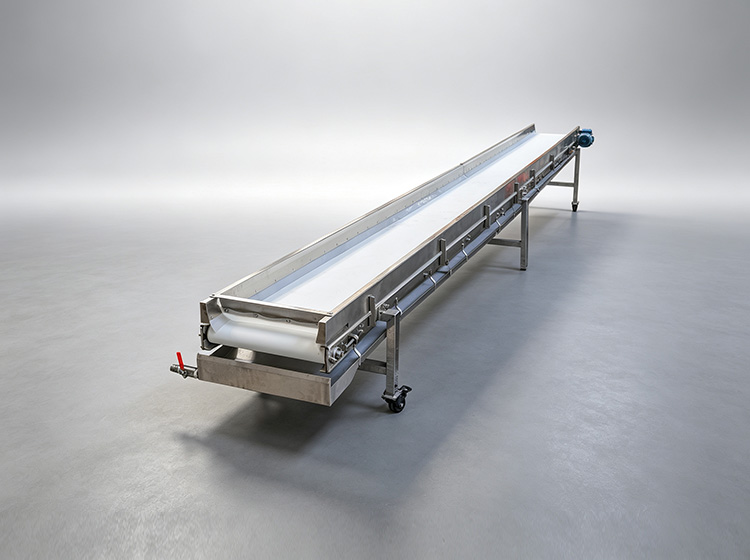
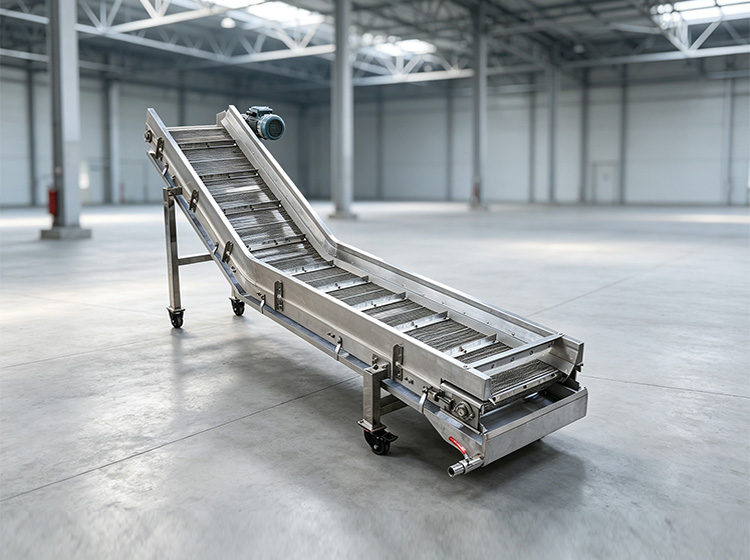
First, if a food conveyor belt breaks, the damaged section of the conveyor belt must be rejoined.

Different jointing processes must be selected based on conveyor belt material, thickness, width, and on-site environmental conditions.

For most laminated fabric belts or nylon belts, convenient and fast cold vulcanization is typically selected for joint processing.

SK313 Cold Vulcanizing Adhesive is a high-performance, two-component industrial adhesive imported from Germany.Suitable for bonding rubber-to-rubber, metal-to-rubber, rubber-to-fabric, and fabric-to-fabric.It is the ideal adhesive for conveyor belt cold vulcanization repair and drum rubber lining.

When performing on-site operations, the bonding surface must first be ensured to be dry, clean, and free of chemicals, grease, and other secretions; then, use two-component SK313 cold-vulcanizing adhesive together with RIT repair strips featuring a semi-vulcanized layer for joint treatment.

The first step is step-by-step, tiered separation of the laminated belt, followed by grinding and cleaning.Then, apply adhesive layer by layer to each stratified section, and affix the pre-glued repair strip onto the joint for sealing.

In addition, for steel cord belts or solid-woven belts, the hot vulcanization process with strong bonding continuity should be selected.The vulcanizing machine is used together with hot-vulcanizing adhesive, RIT uncured core rubber, and cover rubber to process the joint.

Since the splicing of steel cord belts or solid woven belts is relatively complex, it is recommended that professional construction teams perform the operation to ensure safety.Improper operation or inadequate attention to detail can easily lead to secondary cracking.Therefore, timely maintenance and servicing of production equipment are essential to prevent more serious failures.

Jinan Dayi Machinery Technology Co., Ltd. is located in the beautiful Spring City—Jinan.The company has long been engaged in the research and development of food production line machinery and production technologies, adopting standardized manufacturing processes and automated control concepts to focus on developing stable and reliable production equipment.The company’s design team possesses extensive experience in design, R&D, commissioning, and production, and is supported by responsible on-site engineering personnel for manufacturing and commissioning—enabling us to provide you with standardized design, manufacturing, and commissioning processes.

What conditions should be considered during implementation or selection?

First, the product type, raw material condition, formulation direction, and expected finished product requirements must be clearly defined.For projects involving extrusion, forming, drying, frying, conveying, flavoring, or packaging, the processing capacity and cycle time of each stage must be matched to prevent mismatch between the capacity of individual equipment and the overall line requirements.

Secondly, the installation plan should be evaluated in combination with workshop space, power supply, water supply, steam or gas utility conditions.Long-term usage factors such as cleaning, maintenance, safety protection, spare parts availability, and operator training should also be considered in equipment configuration.Where processes or equipment capabilities are mentioned in the text, they are provided solely for reference during solution discussions and preliminary assessments.Specific model numbers, power ratings, production capacities, temperatures, and time settings shall be subject to the official technical proposal and verification results from trial operation or on-site testing.

Frequently Asked Questions

Can the equipment be finalized based on the standard configuration?

Not recommended.Different raw materials, product structures, target production capacities, and downstream processes affect equipment configuration.It is safer to first confirm the product and process conditions, then proceed with configuration evaluation.

How can I obtain more targeted advice?

It is recommended to prepare product images or sample information, raw material and formulation details, target production capacity, existing workshop conditions, and planned downstream equipment configuration.Dayi Machinery can further communicate the applicable process routes and equipment configuration ranges based on this.

This article is compiled based on Dayi Machinery’s “Food Conveyor Belt Breakage Repair Method” documentation, aiming to help readers understand the relevant topic.Technical requirements for specific projects shall be subject to the actual product documentation and engineering confirmation results.