Principles and Functions of Twin-Screw Extrusion Puffing Machine

Published:2026-07-18

The principles and functions of twin-screw extruders involve process, equipment selection, and operational management issues in food processing and production equipment.The actual solution should be confirmed based on raw material characteristics, target product specifications, production scale, and on-site conditions, and should not be determined solely by the parameters of a single piece of equipment.

Key Principles and Functions of Twin-Screw Extrusion Puffing Machines

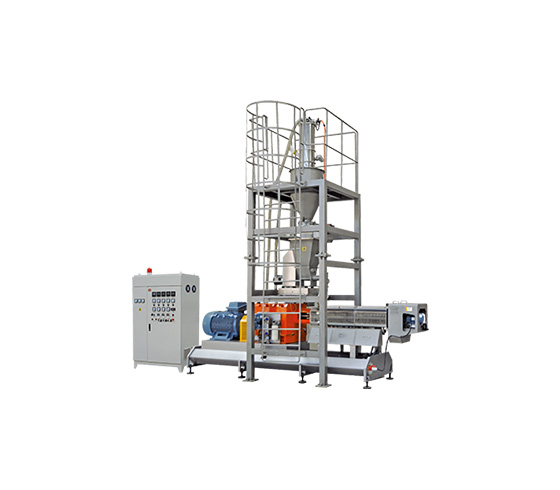
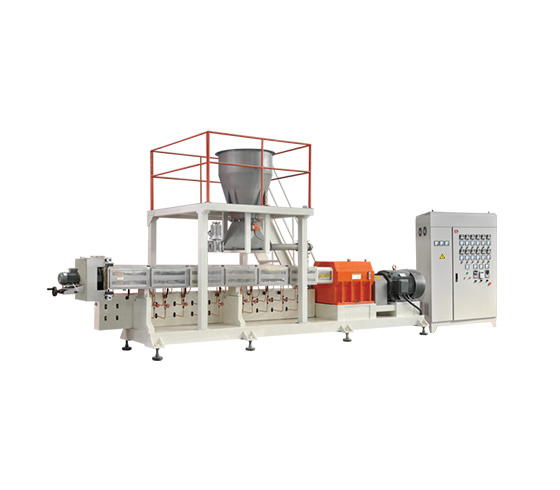
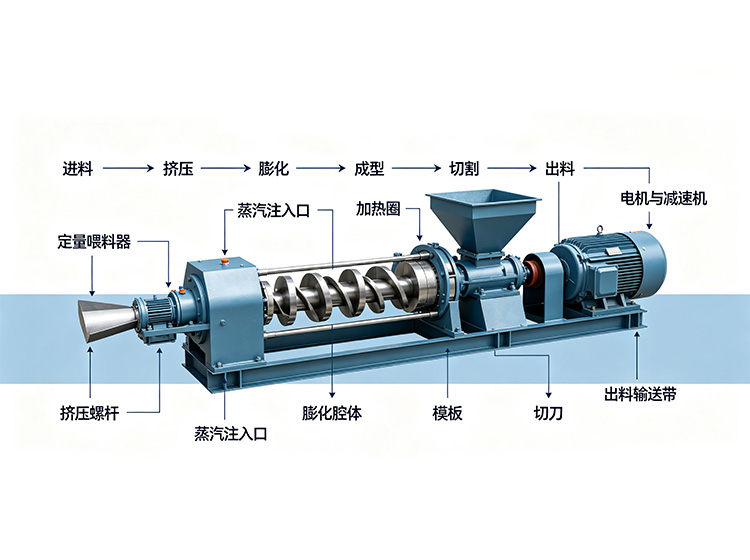
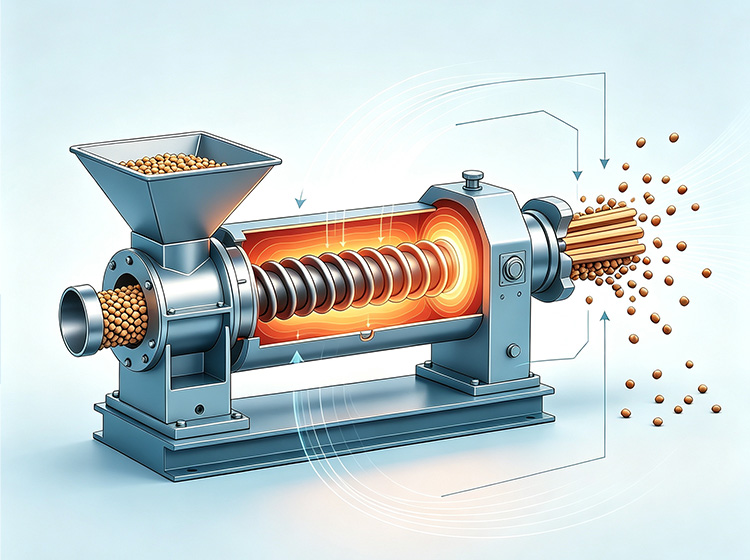
Subject: Principles and Functions of Twin-Screw Extrusion Puffing MachineWorking Principle: Obviously, the material flows from the high-pressure zone to the low-pressure zone under the action of a pressure differential, specifically manifesting in two directions: On the one hand, as the screw rotates, the wear of the square thread is reduced, and the material is conveyed, sheared, and mixed during this process, while being heated by the barrel.On the other hand, under high pressure, the material undergoes cooking and is finally extruded from the barrel.

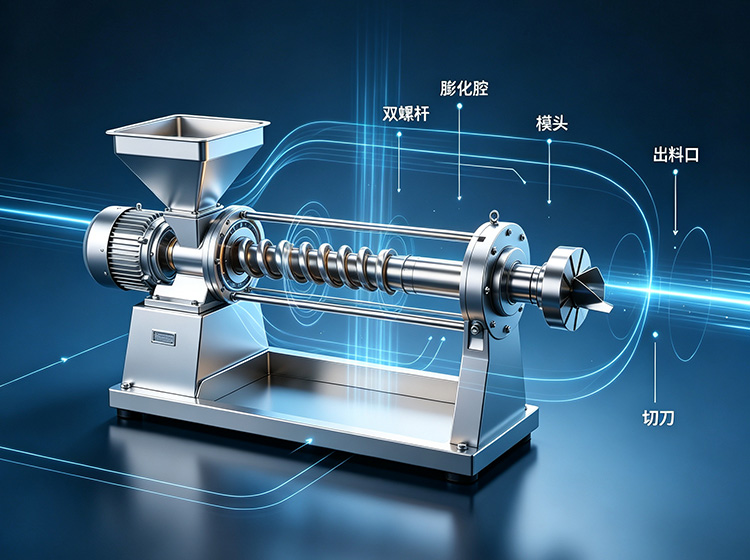
Subject: Principles and Functions of Twin-Screw Extrusion Puffing MachineWorking Principle: A reverse-rotating twin-screw extrusion puffing machine typically employs two screws of identical dimensions but with opposite thread helices.The difference between the internal rotation type and the external rotation type lies in the position of the pressure zone.The uneven pressure distribution generated by the internally rotating twin-screw system causes extremely high pressure at the feed inlet as the material passes through the twin screws, leading to feeding difficulties.Currently, this type of inward-rotating reverse-rotation model is rarely used.The pressure distribution generated by the external-rotating twin-screw also exhibits high and low variations, but it is favorable for feeding.However, compared to co-rotating operation, the C-shaped material flow formed in the screws during counter-rotating operation cannot be exchanged between the two screws, resulting in significantly reduced material mixing and lacking the self-cleaning capability characteristic of co-rotating operation.Overall, the twin-screw extrusion puffing machine operates with high efficiency and stability.

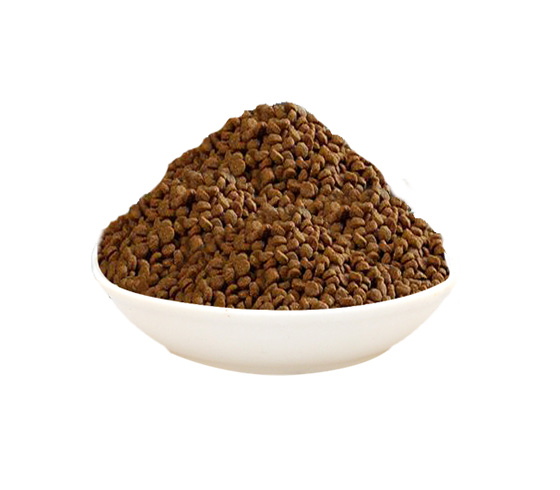
Subject: Principles and Functions of Twin-Screw Extrusion Puffing MachineFeatures and Functions: The twin-screw extrusion puffing machine offers advantages such as strong adaptability, slip conveying, and self-cleaning capabilities. However, its complex structure results in higher investment costs, as well as elevated maintenance and operational expenses.Therefore, twin-screw extruders are generally used to produce high-value-added aquaculture and pet feeds, such as feeds for eels, soft-shell turtles, and juvenile fish, because the market prices of these products are sufficient to cover the higher manufacturing costs associated with twin-screw technology.In addition, other specialized aquaculture feeds, such as micro-pelleted aquaculture feed (diameter 0.8–1.5 mm), high-fat aquaculture feed, and feeds with small production volumes but frequently changing formulations, also require twin-screw extrusion pelleting machines for production.

Subject: Principles and Functions of Twin-Screw Extrusion Puffing MachineFeatures and Functions: In comparison, such extrusion equipment, particularly medium-sized twin-screw extruders, requires wide-range adjustments during operation due to the unique nature and broad variability of raw materials.Similarly, due to its different working principle compared to single-screw extruders, there are also significant differences in its specific structure.Therefore, attention should be paid to relevant details when selecting and using the equipment.If you have any questions when selecting a twin-screw extrusion machine, please contact us for consultation.

What conditions should be considered during implementation or selection?

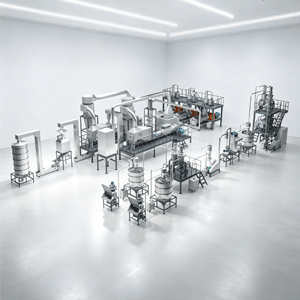
First, it is essential to clarify the product type, raw material state, formulation direction, and expected finished product requirements.For projects involving extrusion, forming, drying, frying, conveying, seasoning, or packaging, the processing capacity and cycle time of each stage must be matched to avoid discrepancies between individual equipment capacity and the overall line requirements.

Secondly, the installation plan should be evaluated in conjunction with the workshop's spatial layout and utility conditions, including power supply, water supply, steam, or gas.Equipment configuration should also take into account long-term operational factors such as cleaning, maintenance, safety protection, spare parts supply, and operator training.Any process or equipment capabilities mentioned in this document are for reference only in the context of solution discussions and preliminary assessments.Specific model numbers, power ratings, production capacities, temperatures, and times shall be subject to the official technical proposal and the results of trial runs or on-site verification.

Frequently Asked Questions

Can the equipment be determined directly based on the standard configuration?

Not recommended.The equipment configuration is influenced by different raw materials, product structures, target production capacities, and downstream processes.It is more prudent to confirm the product and process conditions before proceeding with the configuration assessment.

How to obtain more targeted advice?

It is recommended to prepare product images or sample information, raw material and formulation guidelines, target production capacity, existing workshop conditions, and planned downstream equipment configurations.Dayi Machinery can further discuss the applicable process routes and equipment configuration options based on this.

This article is compiled based on the document “Principles and Functions of Twin-Screw Extrusion Puffing Machine” provided by Dayi Machinery, with the aim of helping readers understand the relevant topics.For technical requirements related to specific projects, please refer to the actual product documentation and engineering confirmation results.