Promising Prospects for Food Machinery (Part Two)

Published:2026-07-18

Promising Prospects in Food Machinery (Part Two) addresses issues related to the processes, selection, and operational management of food processing and production equipment.The actual solution should be confirmed based on raw material characteristics, target product specifications, production scale, and on-site conditions, and should not be determined solely by the parameters of a single piece of equipment.

Key Points of the Promising Food Machinery (Part Two)

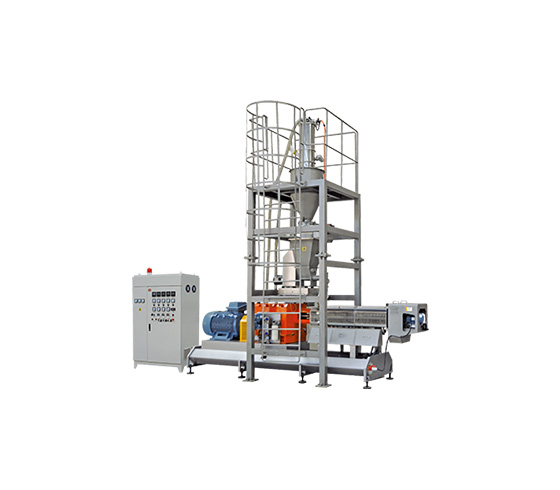
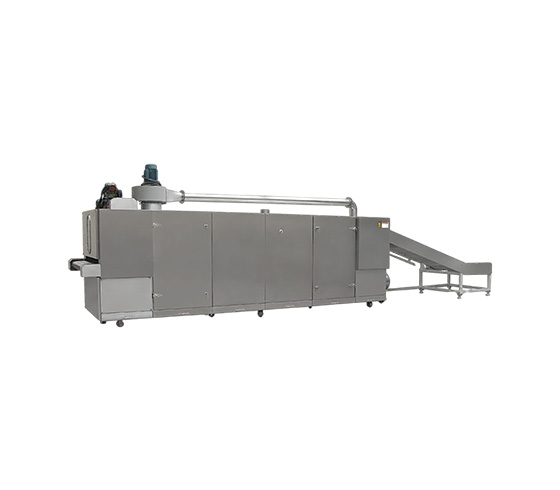
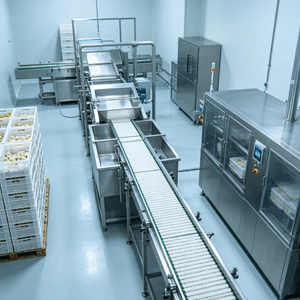
Instant Food Processing Equipment With the accelerating pace of modern life and the booming tourism industry, instant foods reflect the characteristics of the times and the development trends of the food industry.Not only are side dishes and snack foods becoming more convenient, but staple foods are also increasingly convenient, such as instant noodles, instant rice, instant porridge, instant dumplings, and other traditional Eastern convenience foods.Therefore, the food industry requires a large number of convenient food processing equipment.

Food Cold Sterilization Equipment: Traditional high-temperature sterilization methods easily damage the original flavor and vitamin C of food, and alter enzyme characteristics.Coolpure cold sterilization technology was approved by the U.S. Food and Drug Administration (FDA) in July 1995.This method utilizes short-time high-voltage pulsed electric fields to sterilize liquids or pumpable foods, making it suitable for the inactivation of microorganisms in alkaline solutions and viscous food products.Currently, industrial production equipment with a processing capacity of 3000–10000 L/h is in operation.Another cold sterilization technology is high-pressure processing, with pressures reaching up to 100–200 MPa.This technology can extend the shelf life of plastic bag-packaged avocados from 8 to 10 days to 30 to 45 days.In recent years, Japan has applied high-pressure technology to fields such as fruit yogurt, fruit desserts, jams, fruit juices, sausages, and fish products.Furthermore, ultrasonic sterilization equipment has been widely adopted in developed countries such as the United States, Japan, and Europe.This equipment utilizes the intense cavitation effect generated by focused ultrasonic energy to effectively disrupt the cell walls of microorganisms in small volumes, thereby extending shelf life without compromising the original flavor of the food.

Supercritical Extraction Equipment: Supercritical fluid extraction equipment uses a specific gas in a supercritical fluid state (slightly above the critical temperature and near the critical point) to continuously extract active ingredients from natural raw materials into the supercritical fluid.This equipment is widely applicable to the extraction and processing of natural food colorants, spices, flavorings, oils, medicinal plants and animals, and traditional Chinese medicines.This equipment features low-temperature extraction and inert gas protection, ensuring that the extract is free from organic solvent residues, retains its natural extraction characteristics, and does not pollute the environment.

Ultrasonic Homogenization and Refining Equipment: Traditional high-pressure homogenizers cannot further refine materials by simply increasing pressure.The conventional ultrasonic homogenizer also yields unsatisfactory results in breaking down fibrous structures and fat globules.Currently, the United States has successfully developed a new generation of focused-energy ultrasonic homogenizers, each equipped with a single transducer delivering 150 W of power. It is reported that these devices can reduce the particle size of solids in fruit juice beverages to 0.1–0.5 μm, without altering the material properties due to temperature changes, as is often the case with high-pressure homogenizers.

Ultrafiltration Separation Equipment The development of membrane separation equipment, including microfiltration, ultrafiltration, and reverse osmosis, has provided highly effective processing methods for engineered food products.Based on the molecular weight of the substances in the solution to be separated, select the appropriate membrane material or a membrane with the corresponding pore size, and perform separation under pressure-driven conditions using different membrane modules, without compromising nutritional components and flavor substances.This equipment can perform processes such as separation, purification, sterilization, clarification, and concentration, and can also modify the texture of the product.In particular, bio-type hollow fiber ultrafiltration systems have been used for the concentration of active ingredients in food and for the treatment of wastewater from food processing plants.

Vacuum Equipment Vacuum equipment has significant application potential in the food industry.Currently, the food industry widely employs technologies such as vacuum concentration, vacuum packaging, vacuum nitrogen flushing packaging, vacuum paste packaging, vacuum drying, vacuum frying, vacuum fumigation, vacuum conveying, vacuum impregnation, and vacuum cooling.

Jinan Dayi Machinery Technology Co., Ltd. is located in the beautiful spring city of Jinan.The company has long been engaged in the research and development of food production line machinery and production processes, possessing standardized production technologies and an automated control operational philosophy, while focusing on the development of stable and reliable production equipment.Our company’s design team possesses extensive experience in design, R&D, commissioning, and production, and is supported by dedicated on-site engineering technicians who handle production and commissioning tasks. This enables us to provide you with standardized processes for design, production, and commissioning.

What conditions should be considered during implementation or selection?

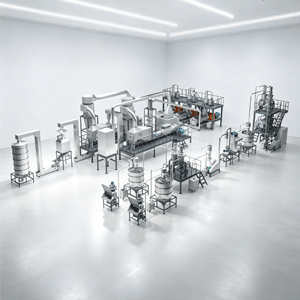
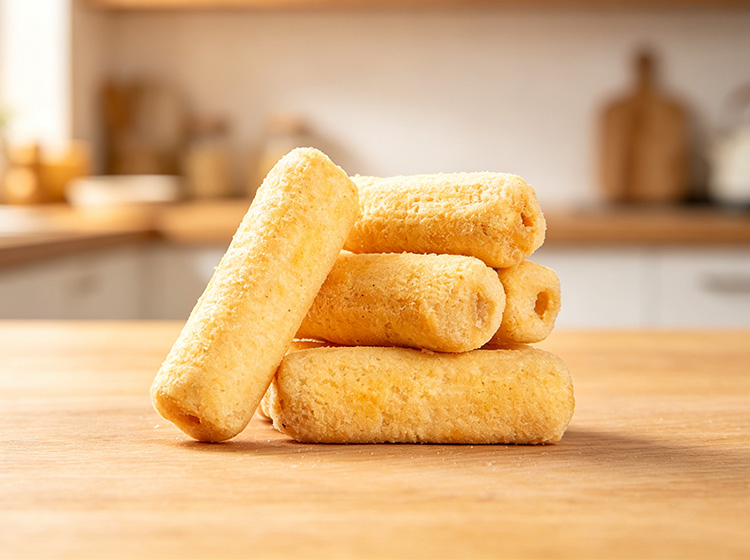
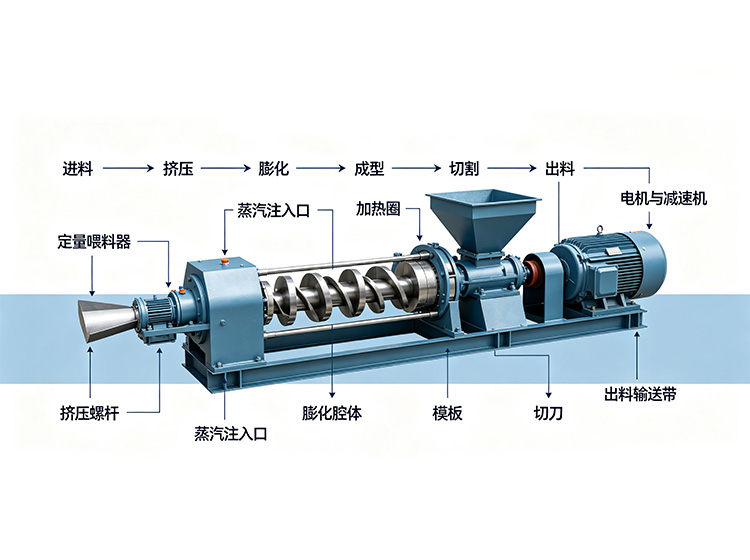
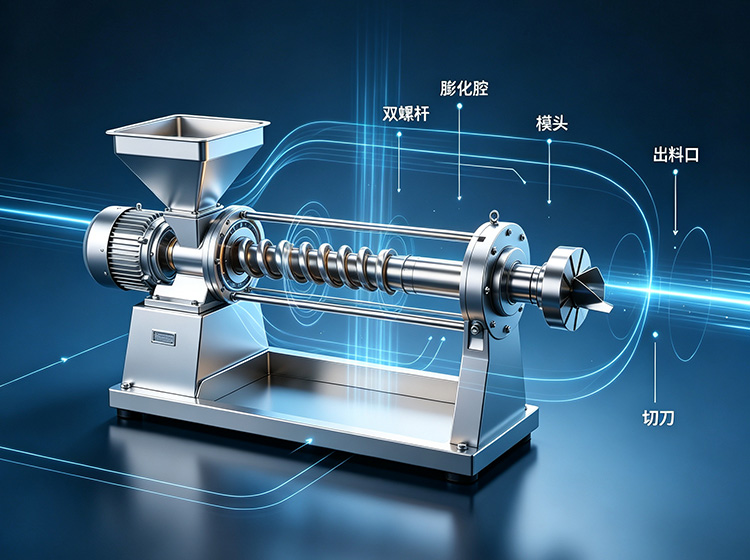
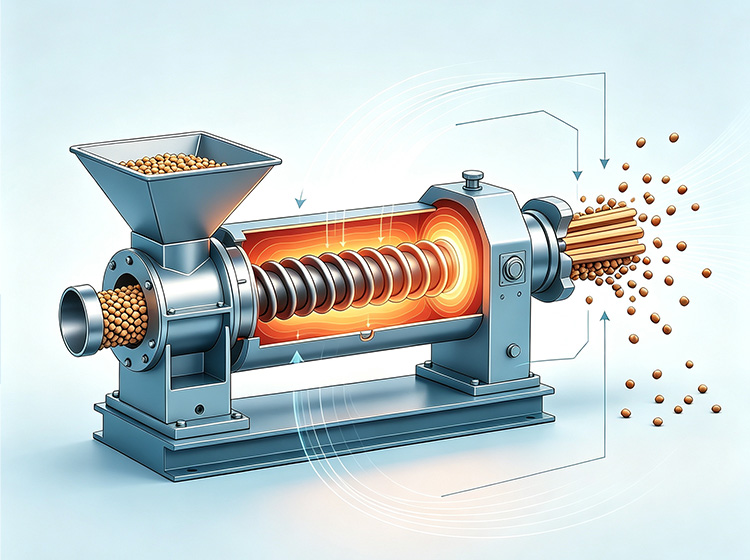
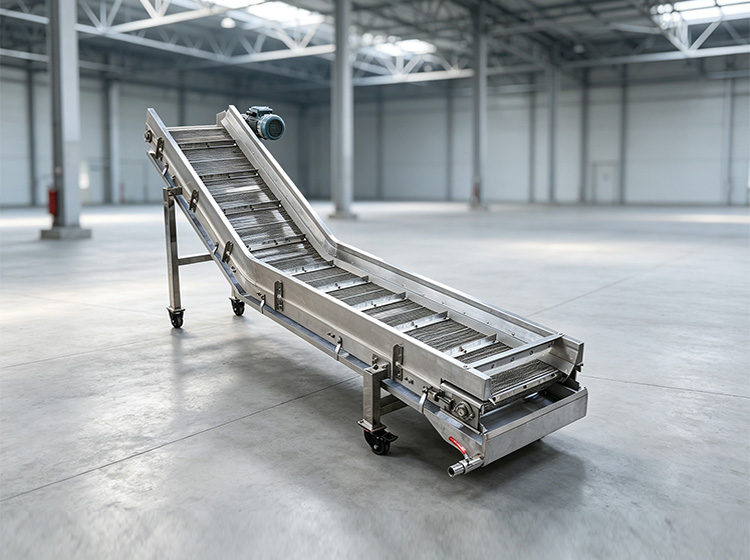
First, it is essential to clarify the product type, raw material state, formulation direction, and expected finished product requirements.For projects involving extrusion, forming, drying, frying, conveying, seasoning, or packaging, the processing capacity and cycle time of each stage must be matched to avoid discrepancies between individual equipment capacity and the overall line requirements.

Secondly, the installation plan should be evaluated in conjunction with the workshop's spatial layout and utility conditions, including power supply, water supply, steam, or gas.Equipment configuration should also take into account long-term operational factors such as cleaning, maintenance, safety protection, spare parts supply, and operator training.Any process or equipment capabilities mentioned in this document are for reference only in the context of solution discussions and preliminary assessments.Specific model numbers, power ratings, production capacities, temperatures, and times shall be subject to the official technical proposal and the results of trial runs or on-site verification.

Frequently Asked Questions

Can the equipment be determined directly based on the standard configuration?

Not recommended.The equipment configuration is influenced by different raw materials, product structures, target production capacities, and downstream processes.It is more prudent to confirm the product and process conditions before proceeding with the configuration assessment.

How to obtain more targeted advice?

It is recommended to prepare product images or sample information, raw material and formulation guidelines, target production capacity, existing workshop conditions, and planned downstream equipment configurations.Dayi Machinery can further discuss the applicable process routes and equipment configuration options based on this.

This article is compiled based on the materials provided by Dayi Machinery, titled “Promising Food Machinery (Part II),” with the aim of helping readers understand the relevant topics.For technical requirements related to specific projects, please refer to the actual product documentation and engineering confirmation results.