Ten Key Parameters for Qualified Food Processing Equipment

Published:2026-07-18

The ten parameters for qualified food equipment involve process, selection, or operational management issues related to food processing and production equipment.The actual solution should be confirmed based on raw material characteristics, target product specifications, production scale, and on-site conditions, and should not be determined solely by single equipment parameters.

Key Points of the Ten Core Parameters for Qualified Food Equipment

(1) Productivity: Refers to the production capacity of the equipment, which can be measured by the output per unit of time, such as per year, month, or day.(2) Reliability: First, the quality of the finished product is reliable, and the yield rate is high;Secondly, it offers reliable operation with minimal accidents and failures.(3) Maintainability: Refers to the ease of disassembly and reassembly during maintenance.Some equipment designers focus solely on functional implementation and pay little attention to maintenance issues. Sometimes, even disassembling a simple component is laborious, which clearly indicates poor maintainability.(4) Energy efficiency: Refers to the energy consumption per unit of product, i.e., electricity savings.

(5) Safety: Refers to the completeness of protective devices, which not only ensure personal safety but also protect the equipment itself, such as through fault monitoring and automatic alarms.(6) Durability: Refers to the service life of the equipment, primarily its economic life or safe service life.(7) Environmental friendliness: Refers to the degree of pollution to the surrounding environment, including pollution caused by dust, harmful gases, liquid emissions, and noise.(8) Completeness: Refers to the completeness of the random accessories.Complete accessories enable the production of a variety of products, such as the various mold specifications available for mooncake forming machines.(9) Flexibility: Refers to the ease of changing product varieties.Generally, converting products on general-purpose equipment is easier but less efficient;Special-purpose equipment, on the other hand, is difficult to switch between products but offers higher efficiency.(10) Compatibility: To ensure sustainable development, it is necessary to select versatile models and multi-purpose equipment that facilitate product transitions when market demands change.

What conditions should be considered during implementation or selection?

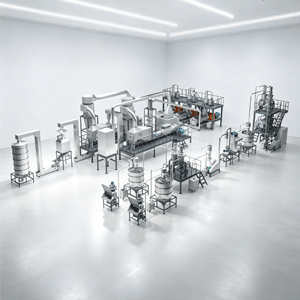
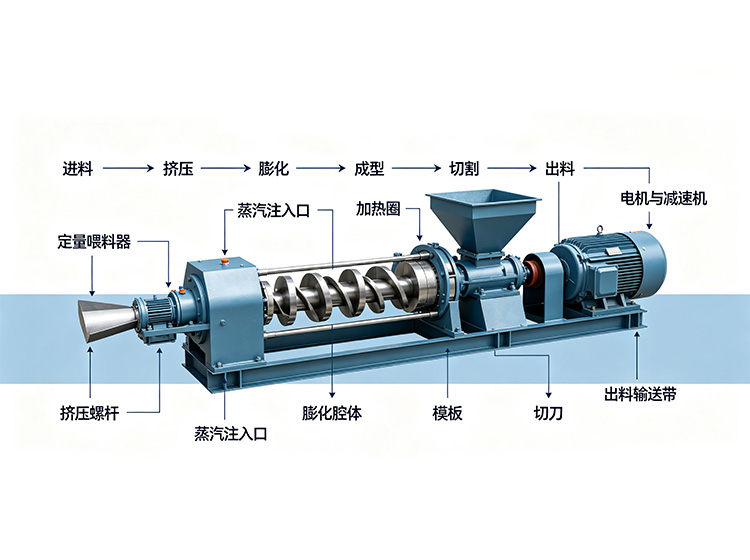
First, it is essential to clarify the product type, raw material state, formulation direction, and expected finished product requirements.For projects involving extrusion, forming, drying, frying, conveying, seasoning, or packaging, the processing capacity and cycle time of each stage must be matched to avoid discrepancies between individual equipment capacity and the overall line requirements.

Secondly, the installation plan should be evaluated in conjunction with the workshop's spatial layout and utility conditions, including power supply, water supply, steam, or gas.Equipment configuration should also take into account long-term operational factors such as cleaning, maintenance, safety protection, spare parts supply, and operator training.Any process or equipment capabilities mentioned in this document are for reference only in the context of solution discussions and preliminary assessments.Specific model numbers, power ratings, production capacities, temperatures, and times shall be subject to the formal technical proposal and the results of trial runs or on-site verification.

Frequently Asked Questions

Can the equipment be determined directly based on the standard configuration?

Not recommended.Different raw materials, product structures, target production capacities, and downstream processes can affect the equipment configuration.It is more prudent to confirm the product and process conditions before proceeding with the configuration assessment.

How to obtain more targeted advice?

It is recommended to prepare product images or sample information, raw material and formulation guidelines, target production capacity, existing workshop conditions, and planned downstream equipment configurations.Dayi Machinery can further discuss the applicable process routes and equipment configuration options based on this.

This article is compiled based on the "Ten Parameters of Qualified Food Equipment" provided by Dayi Machinery, aiming to help readers understand the relevant topics.For technical requirements related to specific projects, please refer to the actual product documentation and engineering confirmation results.