Razor clams are in high demand in the market—how can heat pump dryers help drive industry development?Issues related to the process, selection, or operational management of food processing and production equipment.The actual solution should be confirmed based on raw material characteristics, target product specifications, production scale, and on-site conditions, and should not be determined solely by single equipment parameters.
Razor clams are in high demand in the market—how can heat pump dryers help drive industry development?Key Points
As the national economy continues to improve, seafood and aquatic products are increasingly appearing on consumers' dining tables, with consumption volumes steadily rising.Against this backdrop, bivalve aquaculture products, represented by razor clams, have provided a new pathway for local rural revitalization and increased income for villagers.The scaled razor clam industry has emerged in various regions, and the construction of the razor clam aquaculture, harvesting, and processing industry chain is accelerating continuously.To meet the demands of large-scale production, machinery such as drying equipment has gradually been put into production use.
China has four major sea areas, which are abundant in various seafood and aquatic products such as sea cucumbers, abalones, squids, blue crabs, and mussels.Thanks to the rise in residents' consumption levels in recent years and the accelerated development of infrastructure such as cold chain logistics, seafood consumption in coastal areas and inland cities has undergone significant changes in both volume and quality.The variety of seafood is increasingly diverse, and its quality is continuously improving.
With the increasing consumption of seafood, China's seawater aquaculture industry has also developed rapidly, in addition to the gains from marine capture fisheries.Among these, bivalve mollusks, represented by the razor clam, have become highly sought-after in the market due to their unique attributes. The scale of razor clam farming in areas such as Ninghai in Zhejiang Province and Fuqing in Fujian Province is expanding steadily.
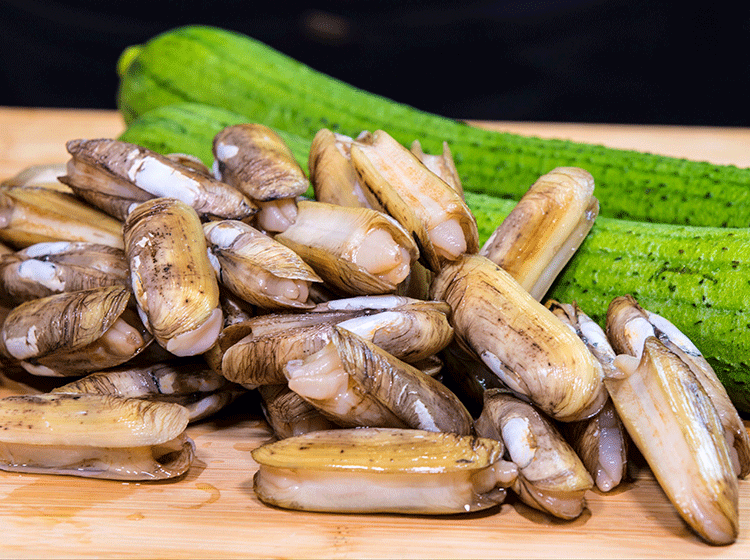
The razor clam’s uniqueness lies in its elongated, razor-shaped shell, earning it the elegant nickname “Xishi’s Tongue,” which sets it apart from the traditional bivalves commonly known to consumers.Liang Shiqiu once wrote in his collection of essays: “Shishi She belongs to the mollusk family; it resembles a razor clam but is smaller, and resembles a clam but is longer;The water pipe is slender, white in color, and often extends outside the shell, resembling a tongue.Tasting the delicate flavor of Xishi's Tongue is not surprising, as its freshness and umami are truly remarkable.”
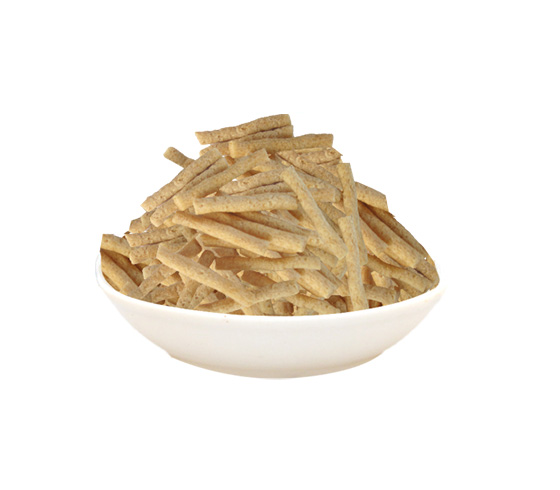
After entering the consumer market, razor clams are consumed not only fresh but also primarily in dried form.It is reported that dried razor clams have a yolk-yellow color, plump flesh, and are rich in nutrients such as protein and vitamins, with a delicious flavor.Meanwhile, after post-processing and polishing, the market price of dried razor clams can range from tens to hundreds of yuan per jin, which is of great significance for enhancing product added value and increasing industry income.
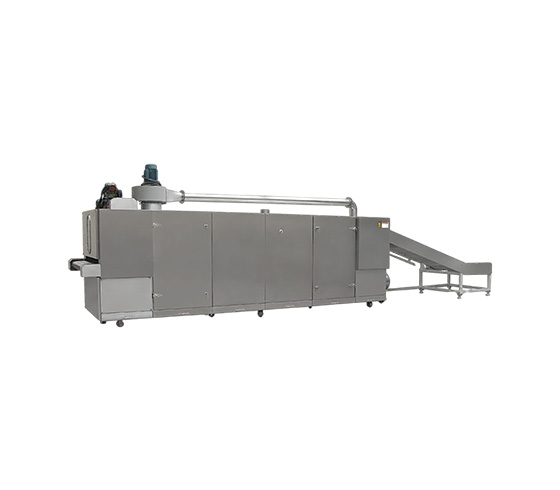
It is worth noting that, against the backdrop of consumption upgrading, large-scale razor clam farming has gradually transitioned to mechanized processing in recent years.For example, the introduction of dryers has replaced traditional sun-drying and air-drying, bringing a new production model.It is understood that heat pump dryers are currently widely used in the drying and processing of razor clams.
As is well known, heat pump drying employs a closed-loop drying process, allowing temperature, humidity, drying time, and other parameters to be adjusted according to the processing requirements of the materials.This equipment offers advantages such as high drying quality, energy efficiency, and minimal risk of contamination, making it widely applicable.When applying heat pump drying equipment to razor clam processing, initial drying is typically carried out at around 50 to 60°C to reduce the moisture content to a certain level, followed by storage under refrigeration (or in a natural environment) for moisture equilibration, and then secondary drying.After undergoing multi-layer drying, the finished dried razor clams overcome the drawbacks of traditional drying methods, such as coarse texture and poor appearance, with significant improvements in both color and aroma.
In recent years, the consumption of seafood and aquatic products has shown strong growth, presenting a significant opportunity for upstream industries.Upgrading production and processing to enhance product quality and efficiency is key to enabling razor clam products to capture market share.Upstream production entities should promptly monitor the development trends of applicable machinery and equipment, accelerate the transition from old to new growth drivers, and enhance the market competitiveness of their products.
What conditions should be considered during implementation or selection?
First, it is essential to clarify the product type, raw material state, formulation direction, and expected finished product requirements.For projects involving extrusion, forming, drying, frying, conveying, seasoning, or packaging, the processing capacity and cycle time of each stage must be matched to avoid discrepancies between individual equipment capacity and the overall line requirements.
Secondly, the installation plan should be evaluated in conjunction with the workshop's spatial layout and utility conditions, including power supply, water supply, steam, or gas.Equipment configuration should also take into account long-term operational factors such as cleaning, maintenance, safety protection, spare parts supply, and operator training.Any process or equipment capabilities mentioned in this document are for reference only in the context of solution discussions and preliminary assessments.Specific model numbers, power ratings, production capacities, temperatures, and times shall be subject to the formal technical proposal and the results of trial runs or on-site verification.
Frequently Asked Questions
Can the equipment be determined directly based on the standard configuration?
Not recommended.Different raw materials, product structures, target production capacities, and downstream processes can affect the equipment configuration.It is more prudent to confirm the product and process conditions before proceeding with the configuration assessment.
How to obtain more targeted advice?
It is recommended to prepare product images or sample information, raw material and formulation guidelines, target production capacity, existing workshop conditions, and planned downstream equipment configurations.Dayi Machinery can further discuss the applicable process routes and equipment configuration options based on this.
This article is based on the information provided by Dayi Machinery: "Razor Clams Gain Popularity in the Market, How Can Heat Pump Dryers Boost Industry Development?"Data compilation, intended to help readers understand the relevant topics;For technical requirements related to specific projects, please refer to the actual product documentation and engineering confirmation results.