The working principle and production capacity of extrusion puffing machines involve process, equipment selection, or operational management issues in food processing and production equipment.The actual solution should be confirmed based on raw material characteristics, target product specifications, production scale, and on-site conditions, and should not be determined solely by single equipment parameters.
Key Points on the Working Principle and Production Capacity of Extrusion Puffing Machines
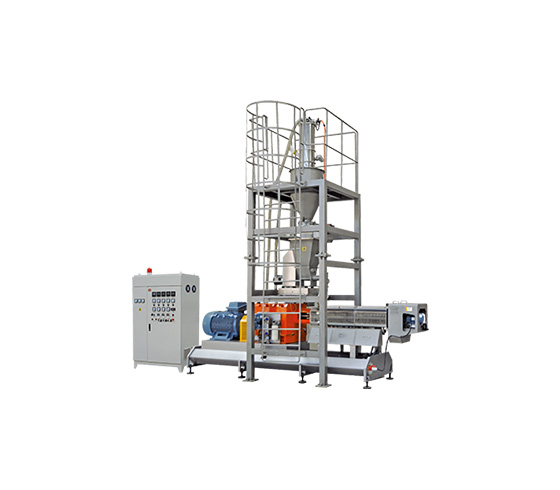
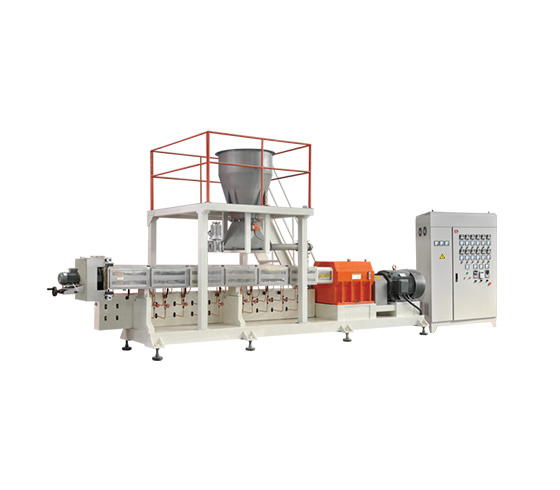
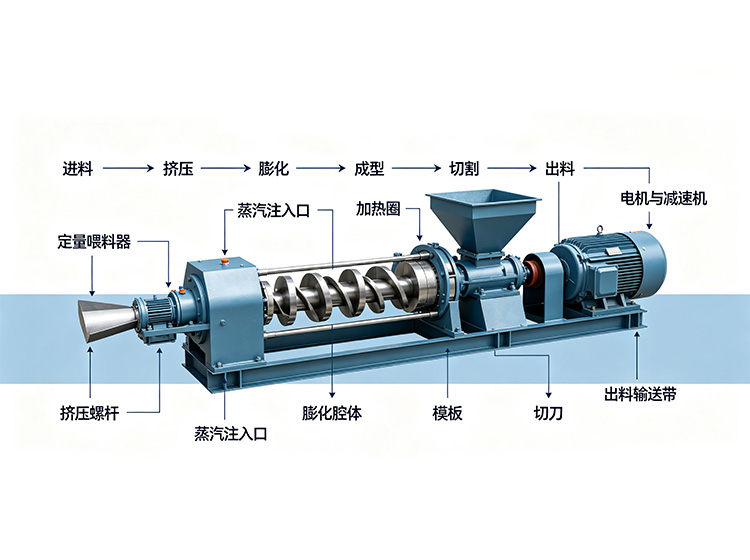
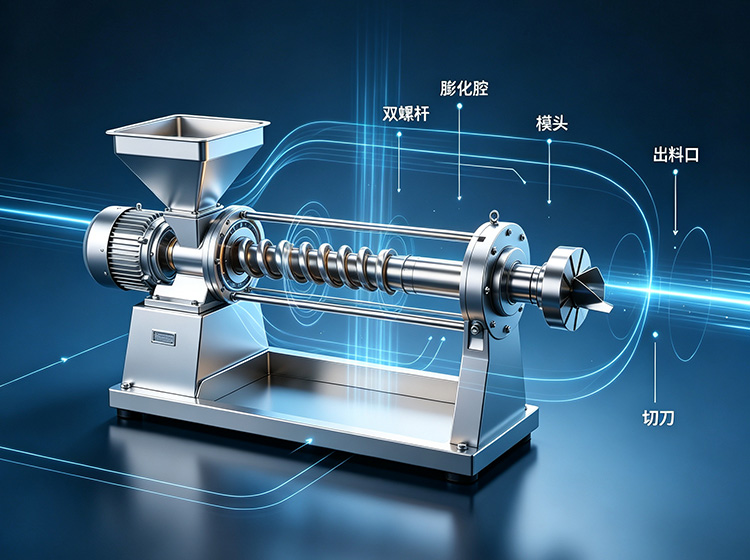
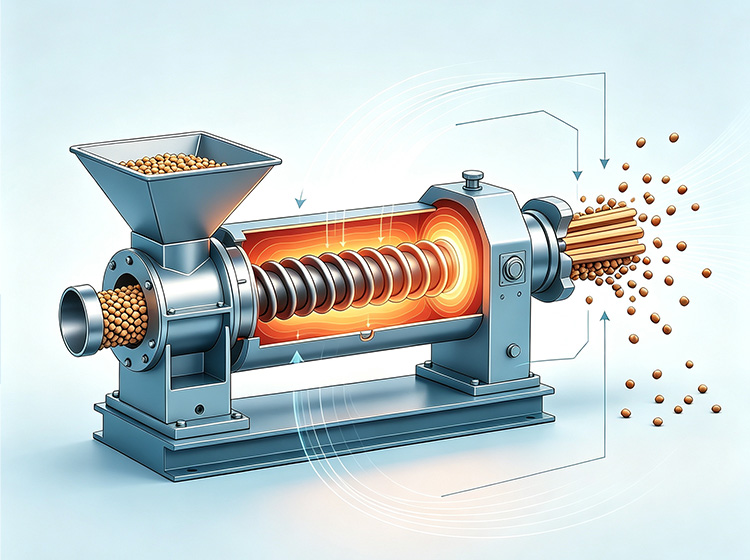
Subject: Working Principle and Production Capacity of Extrusion Puffing Machines;Composition of the extrusion puffing machine: The extrusion puffing machine mainly consists of an extrusion device, a transmission device, a feeding device, a motor, a discharge device, and a base.The core component of the extrusion device is the screw mechanism, which includes a conical hollow shaft and spiral blades.The drive system uses a three-phase asynchronous motor, which is connected to the screw shaft via a coupling.Working principle: The material to be processed enters through the feeding port, where it is extruded and crushed by the screw blades, then conveyed forward by the screw shaft, and finally discharged through the discharge port.The selection of couplings must consider the equipment's working environment and operating conditions, primarily to accommodate axial displacement of the rotating shaft.The movable coupling allows for a certain degree of installation error between two shafts and has the ability to compensate for misalignment between them.
Subject: Working Principle and Production Capacity of Extrusion Puffing Machines;Components of the extrusion puffing machine: This coupling consists of two half-couplings and a cross slider.The convex pads on both sides of the cross slider, which are perpendicular to each other, form sliding pairs with the grooves of the two half couplings.When the coupling of the double-cone mixer operates, the cross slider rotates with both shafts while moving relative to them to compensate for radial displacement between the two shafts.This coupling allows for significant radial offset, as well as minor angular and axial displacements.Due to the centrifugal force generated by the eccentric rotation of the cross slider, it is not suitable for high-speed applications.To reduce wear on the cross slider during relative motion and improve transmission efficiency, regular lubrication is required.Design and material selection for the screw shaft: The screw is the main working component of the spiral juicer, manufactured from stainless steel after casting and precision machining.
Subject: Working Principle and Production Capacity of Extrusion Puffing Machines;What is the production capacity of the extrusion puffing machine?The capacity of an extrusion puffing machine refers to the amount of sugarcane that the equipment can process per unit of time.It is usually expressed in terms of the number of tons of sugarcane processed per hour.In the United States, it was traditionally expressed in terms of the number of tons of sugarcane processed per day.The relationship between these two values is not as directly correlated as one might assume.In practical applications, the hourly tonnage of extrusion is based on the assumption that the extrusion puffing machine operates without failure during the period under consideration;Typically, this data is obtained by dividing the total operating hours of the extrusion expander after the end of the crushing season by the total tonnage of extruded sugarcane, with downtime and fault time deducted in the calculation.
Subject: Working Principle and Production Capacity of Extrusion Puffing Machines;What is the production capacity of the extrusion puffing machine?On the other hand, the daily processing tonnage is calculated by dividing the total tons of sugarcane crushed during the crushing season by the number of working days, without deducting minor downtime.It is common to experience zero failures during a one-hour extrusion process; however, many production daily reports indicate that even with 24-hour continuous extrusion, multiple shutdowns lasting 10 to 20 minutes occur within a single crushing season.As can be seen, even if the number of operating days within a week is carefully recorded, the daily extrusion tonnage will not equal 24 times the hourly extrusion tonnage.
What conditions should be considered during implementation or selection?
First, it is essential to clarify the product type, raw material state, formulation direction, and expected finished product requirements.For projects involving extrusion, forming, drying, frying, conveying, seasoning, or packaging, the processing capacity and cycle time of each stage must be matched to avoid discrepancies between individual equipment capacity and the overall line requirements.
Secondly, the installation plan should be evaluated in conjunction with the workshop's spatial layout and utility conditions, including power supply, water supply, steam, or gas.Equipment configuration should also take into account long-term operational factors such as cleaning, maintenance, safety protection, spare parts supply, and operator training.Any process or equipment capabilities mentioned in this document are for reference only in the context of solution discussions and preliminary assessments.Specific model numbers, power ratings, production capacities, temperatures, and times shall be subject to the formal technical proposal and the results of trial runs or on-site verification.
Frequently Asked Questions
Can the equipment be determined directly based on the standard configuration?
Not recommended.Different raw materials, product structures, target production capacities, and downstream processes can affect the equipment configuration.It is more prudent to confirm the product and process conditions before proceeding with the configuration assessment.
How to obtain more targeted advice?
It is recommended to prepare product images or sample information, raw material and formulation guidelines, target production capacity, existing workshop conditions, and planned downstream equipment configurations.Dayi Machinery can further discuss the applicable process routes and equipment configuration options based on this.
This article is compiled based on the materials provided by Dayi Machinery, titled “Working Principle and Production Capacity of Extrusion Puffing Machines,” with the aim of helping readers understand the relevant topics.For technical requirements related to specific projects, please refer to the actual product documentation and engineering confirmation results.