Automated Control for Green, Energy-Efficient Food Processing Lines

Published:2026-07-18

The automatic control of food processing production lines to achieve green, energy-saving, and consumption-reducing operations involves process, equipment selection, or operational management issues related to food processing and production equipment.The actual solution should be confirmed based on raw material characteristics, target product specifications, production scale, and on-site conditions, and should not be determined solely by single equipment parameters.

Key Points for Achieving Green Energy Saving and Consumption Reduction in Automatic Control of Food Processing Production Lines

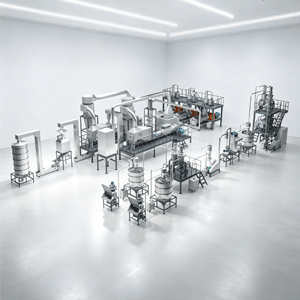
The food industry is always closely related to the daily life of every resident.To achieve green development in the food industry, automatic control technologies for food processing production lines are being steadily advanced.By implementing intelligent control over the entire production line, exposure to contamination sources during food processing and production can be minimized, while steadily enhancing production efficiency.Furthermore, in recent years, corporate standards regarding "carbon emission reduction" have been gradually refined.How does integrated automation control help food processing production lines achieve energy savings and consumption reduction?Which control cabinets will the food processing production line adopt to achieve this goal?Let's explore together.

How does automation control help food processing production lines save energy and reduce consumption?

The primary concern of food processing production lines is how to save water resources.By digitally upgrading and transforming the production line, enterprise managers can quickly obtain data feedback from each stage of the line and, leveraging industry expertise, optimize water resource utilization to achieve water savings.

During the data collection process on the production line, in addition to integrating data collectors at each process step, a PLC control cabinet is also required.As the core equipment for production line management, the PLC control cabinet not only ensures the continuous operation of the production line through logical control but also collects data from sensors at various stages of the line and feeds it back to the host computer.

Which control cabinet equipment is used for energy saving and consumption reduction in food processing production lines?

Energy conservation and consumption reduction in food processing production lines primarily refer to how to save electrical energy and how to improve the utilization rate of production materials.In terms of energy saving, a frequency conversion control cabinet is mainly adopted.Compared with traditional motor control, it smooths the equipment's start-up process, prevents damage to the motor caused by current overload, and achieves energy-saving effects.

In the process of improving production material utilization, in addition to enhancing the operational precision of automated production line equipment, it is also necessary to optimize the processing workflow of the production line to achieve this goal.

Summary

Energy conservation and consumption reduction in food processing production lines primarily involve improving the utilization efficiency of water resources, electrical energy, and production materials.The variable frequency control cabinet is primarily used to ensure equipment safety and improve power utilization efficiency.The improvement of water resource utilization rate mainly involves the optimization of production line processes and how to enhance the reuse rate of water resources.Achieving the above objectives primarily requires the use of PLC control cabinets, variable frequency control cabinets, host computers, and other related production line and equipment control devices.

What conditions should be considered during implementation or selection?

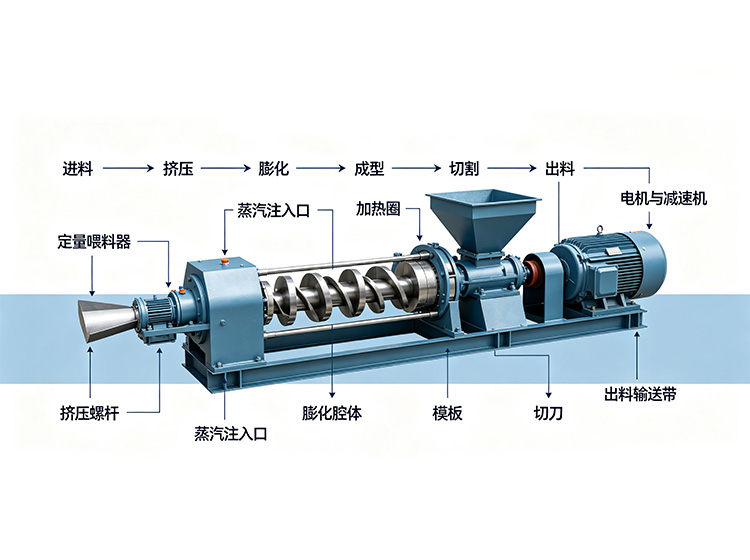
First, it is essential to clarify the product type, raw material state, formulation direction, and expected finished product requirements.For projects involving extrusion, forming, drying, frying, conveying, seasoning, or packaging, the processing capacity and cycle time of each stage must be matched to avoid discrepancies between individual equipment capacity and the overall line requirements.

Secondly, the installation plan should be evaluated in conjunction with the workshop's spatial layout and utility conditions, including power supply, water supply, steam, or gas.Equipment configuration should also take into account long-term operational factors such as cleaning, maintenance, safety protection, spare parts supply, and operator training.Any process or equipment capabilities mentioned in this document are for reference only in the context of solution discussions and preliminary assessments.Specific model numbers, power ratings, production capacities, temperatures, and times shall be subject to the formal technical proposal and the results of trial runs or on-site verification.

Frequently Asked Questions

Can the equipment be determined directly based on the standard configuration?

Not recommended.Different raw materials, product structures, target production capacities, and downstream processes can affect the equipment configuration.It is more prudent to confirm the product and process conditions before proceeding with the configuration assessment.

How to obtain more targeted advice?

It is recommended to prepare product images or sample information, raw material and formulation guidelines, target production capacity, existing workshop conditions, and planned downstream equipment configurations.Dayi Machinery can further discuss the applicable process routes and equipment configuration options based on this.

This article is compiled based on the document “Automatic Control of Food Processing Production Lines for Green Energy Saving and Consumption Reduction” provided by Dayi Machinery, with the aim of helping readers understand the relevant topics.For technical requirements related to specific projects, please refer to the actual product documentation and engineering confirmation results.