Components of a Twin-Screw Extrusion Puffing Machine

Published:2026-07-18

The components of a twin-screw extrusion puffing machine involve process planning, equipment selection, and operating management for food processing and production equipment. The final solution should be confirmed according to raw-material characteristics, target products, production scale, and site conditions; it must not be determined solely from the specifications of one machine.

Key Components of a Twin-Screw Extrusion Puffing Machine

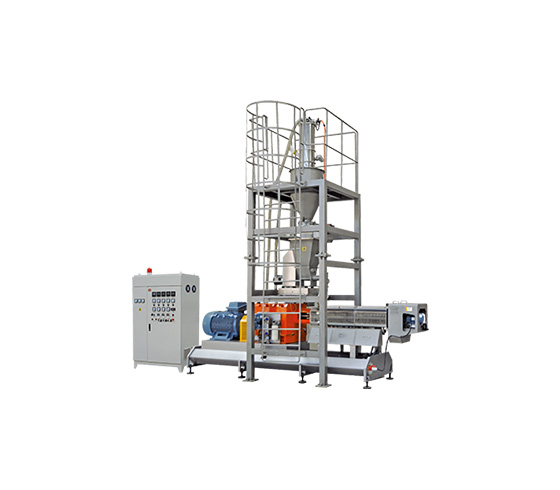
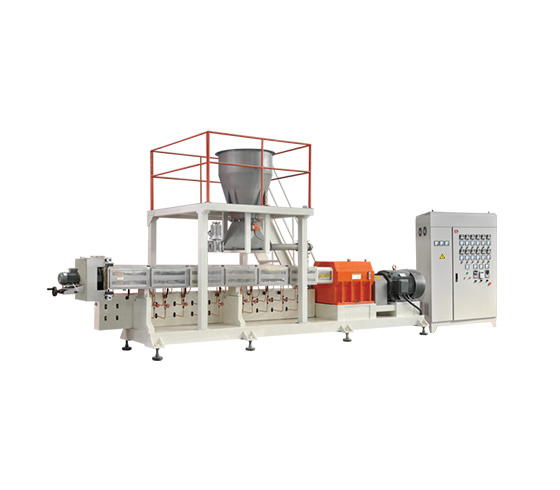
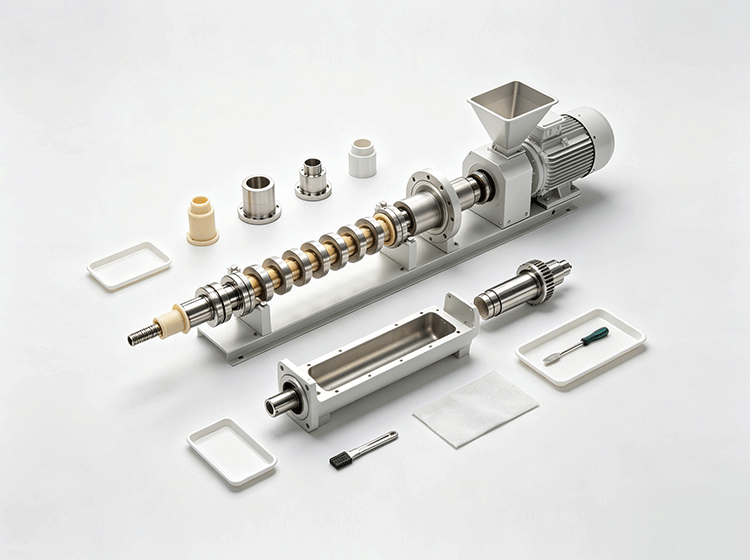
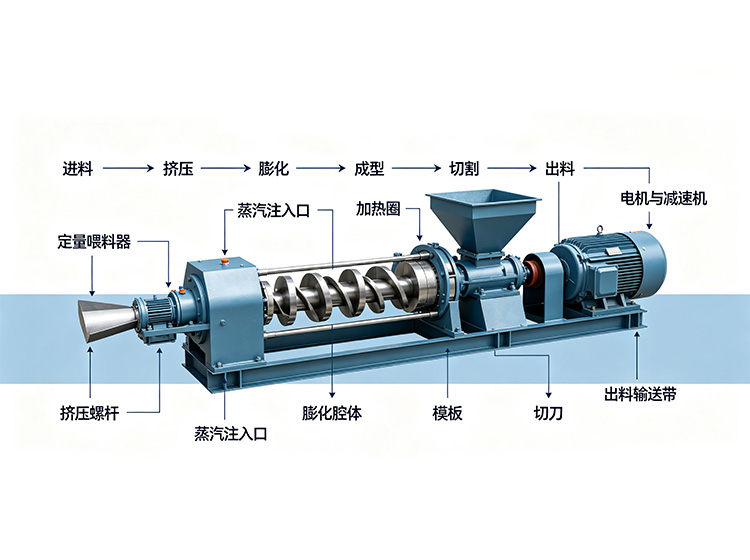
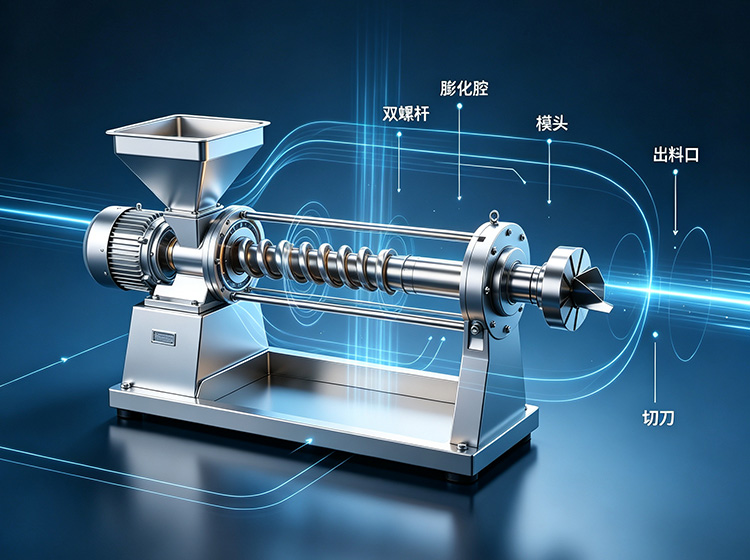
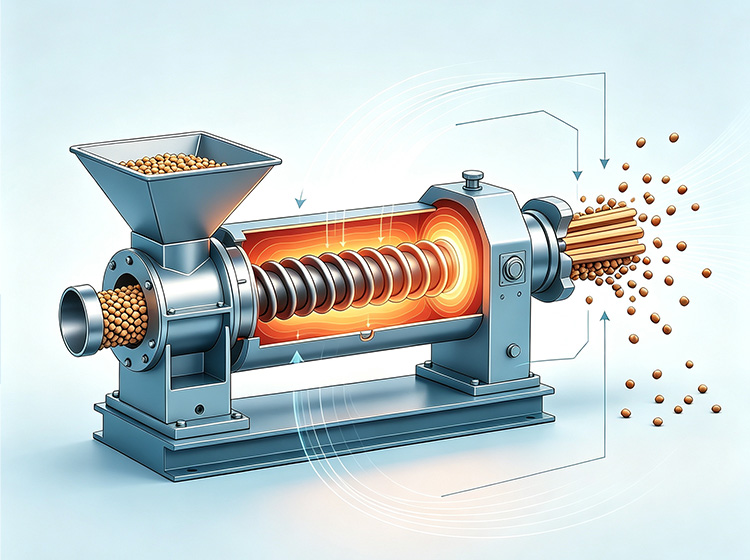
A twin-screw extrusion puffing machine consists of five main systems: the extrusion system (screws and barrel), transmission structure (gearbox, bearings, and motor), feeding system, heating and cooling structure, and control system. Unlike a single-screw extruder, a twin-screw extruder has two screws inside the barrel, with more complex bearing specifications and layouts.

Extrusion system — screw structure: The screw is the core component of an extrusion puffing machine. The screw tooth profile of twin screws does not follow conjugate rules and cannot form a closed meshing line, so it is a non-sealing design. The screws provide self-cleaning action; they are driven through gears, and the driving and driven screws do not directly contact each other.

Extrusion system — barrel structure: The barrel is a metal cylinder with heat resistance, wear resistance, and corrosion resistance. The interaction of the barrel and screws mixes, gelatinizes, and cooks the material. Twin-screw barrels, like single-screw barrels, are available as integral or segmented modular designs. Segmented modular barrels are commonly used in twin-screw extruders to make worn parts easier to replace.

Transmission structure: The transmission system drives the screws and provides the torque and speed required for extrusion. It generally consists of a motor, gearbox, and bearings.

Transmission structure — axial load: The axial force generated by twin screws during extrusion is comparable to or greater than that of a single screw. Such axial loads require larger bearings. However, because the center distance between twin screws limits the installation space, a variety of bearing-layout designs are used.

Feeding system: Depending on material properties and operating requirements, the feeding system of a twin-screw extrusion puffing machine uses forced metered feeding to supply material to the barrel.

Feeding system — independent operation: The feeding device operates independently, similar to a single-screw extruder. The conveying screw is driven by a motor through the output shaft of a worm-gear reducer. Raw-material conveying speed and capacity depend on the operating speed of the twin-screw extruder and pressure inside the barrel. The feed screw may use single-start or double-start threads; single-start threads are the most common.

Heating and cooling structure: Heating and cooling are basic conditions for normal extruder operation. Heating on the twin-screw main unit is usually provided by stainless-steel heater bands. Water passages are reserved inside the barrel, and circulating water reduces barrel temperature. The heater bands and cooling water work together to maintain barrel temperature within the process-required range.

Control system: This system controls the start-up and shutdown of the twin-screw extrusion puffing machine.

What Conditions Should Be Considered During Implementation or Equipment Selection?

First, clarify the product type, raw-material condition, formulation direction, and finished-product requirements. For projects involving extrusion, forming, drying, frying, conveying, seasoning, or packaging, the handling capacity and production rhythm of every stage must match to avoid inconsistency between a single machine and complete-line requirements.

Second, evaluate the installation plan in light of workshop space and utilities such as power, water, steam, or gas. Equipment configuration should also consider long-term factors including cleaning, maintenance, safety protection, spare-parts supply, and operator training. Any process or equipment capabilities mentioned here are for solution discussions and preliminary assessment only; final models, power ratings, capacity, temperatures, and times must be based on the formal technical proposal and trial-run or on-site verification results.

Frequently Asked Questions

Can Equipment Be Determined Directly from a Standard Configuration?

Not recommended. Different raw materials, product structures, target capacities, and downstream processes affect the equipment combination. It is safer to confirm product and process conditions before evaluating the configuration.

How Can I Get More Targeted Advice?

Prepare product photos or sample information, raw-material and formulation direction, target capacity, existing workshop conditions, and planned downstream equipment. Dayi Machinery can then discuss suitable process routes and the applicable equipment configuration range in greater detail.

This article is compiled from material provided by Dayi Machinery on Components of Twin-Screw Extrusion Puffing Machines to help readers understand the subject. Technical requirements for specific projects are subject to actual product information and engineering-confirmation results.