Nutritional Powder Production Process

Published:2026-07-18

Nutritional powder production line process flow involves issues related to food processing and production equipment—such as process design, equipment selection, or operational management. Practical solutions must be confirmed based on raw material characteristics, target product specifications, production scale, and site-specific conditions; decisions must not be made solely on the basis of a single equipment parameter.

Core Process Points of the Nutritional Powder Production Line

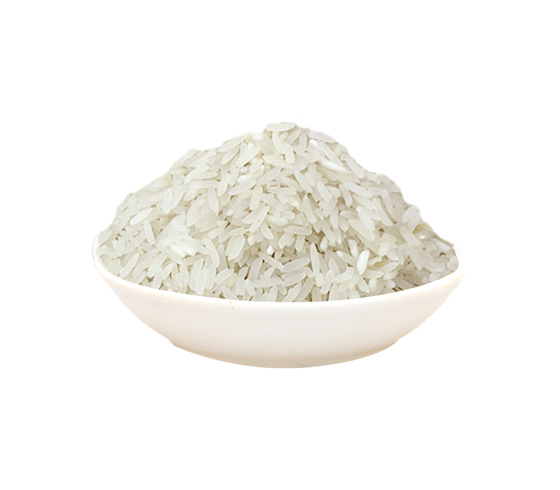
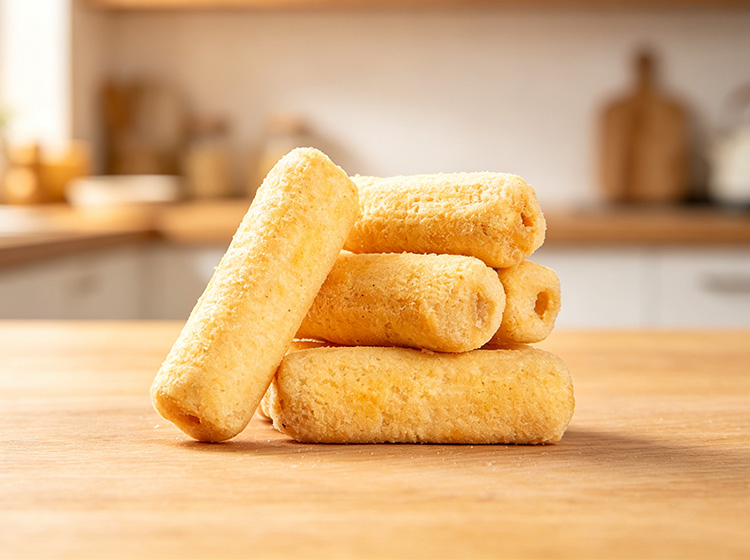
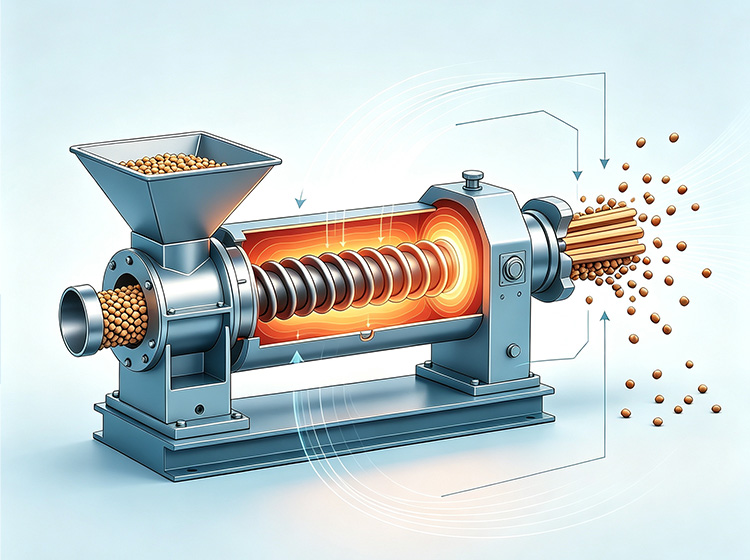
The nutritional powder produced by the nutritional powder production line, as a convenient and efficient nutritional supplement, is increasingly favored by the general public in modern life. The raw materials required for this production line mainly include various grains, proteins, vitamins, minerals, dietary fiber, and other nutrients. This production line upgrades the traditional manual roasting process to adopt high-temperature, high-pressure extrusion puffing technology, enabling full expansion of starch in raw grains for improved human absorption; by adding nutritional components, its nutritional value is significantly higher than that of products manufactured using traditional processes.

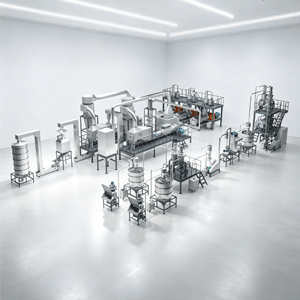
The production process of the nutritional powder production line is crucial for ensuring product quality, safety, and nutritional value. Below is a detailed description of the production line’s process flow:

Mixer: Raw materials required for production are thoroughly and uniformly mixed here.

Screw feeder: Conveys the mixed raw materials to the feed hopper of the extrusion puffing machine. Using a screw-type feeder ensures uniform and stable feeding while preventing material spillage. Additionally, the rotating screw provides secondary mixing of the raw materials during feeding, resulting in more homogeneous blending.

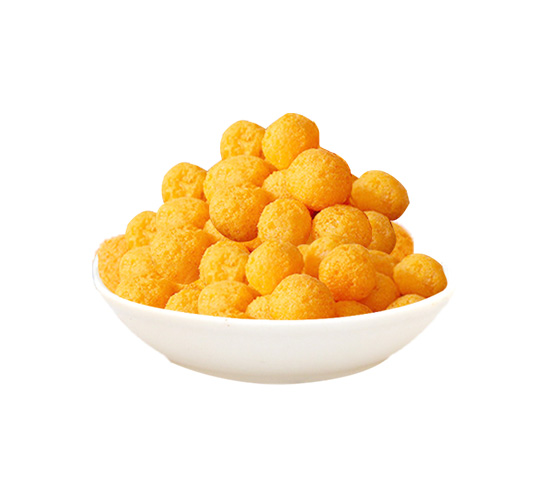
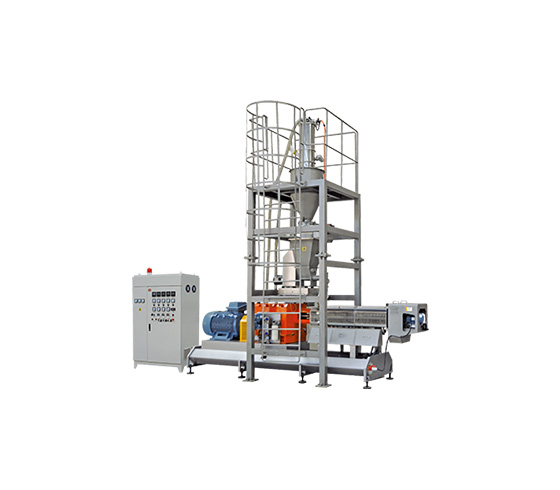
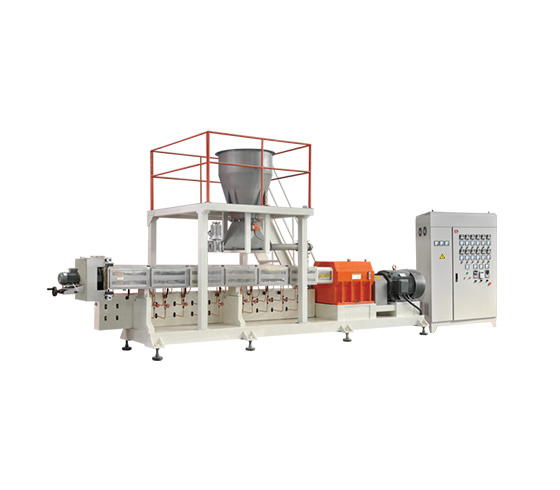
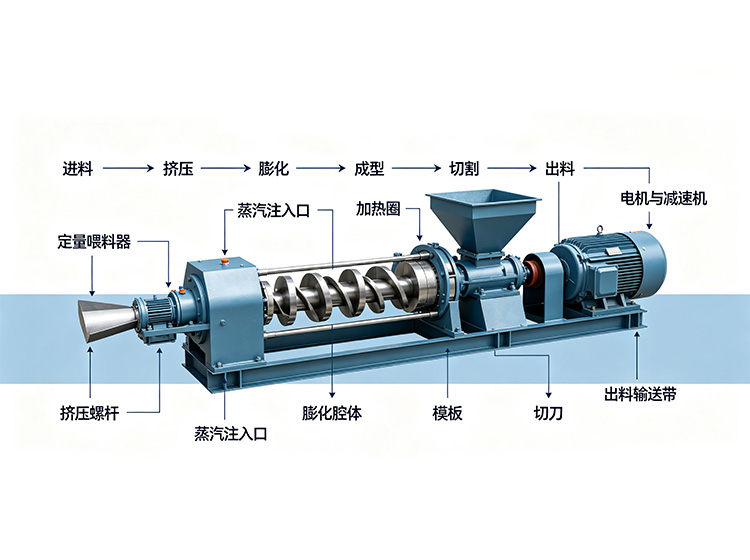
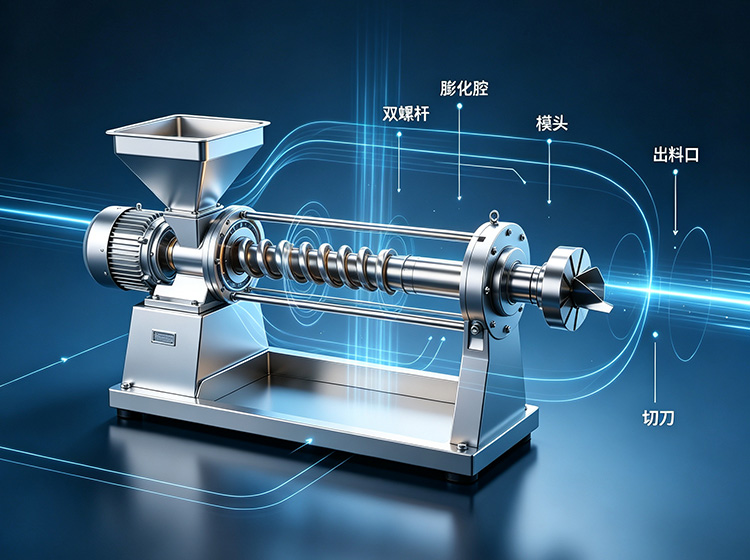
Twin-screw main extruder: Raw materials are mixed here and undergo extrusion puffing, during which their molecular structure changes. After high-temperature, high-pressure processing, the final product is extruded and shaped by the extrusion puffing machine.

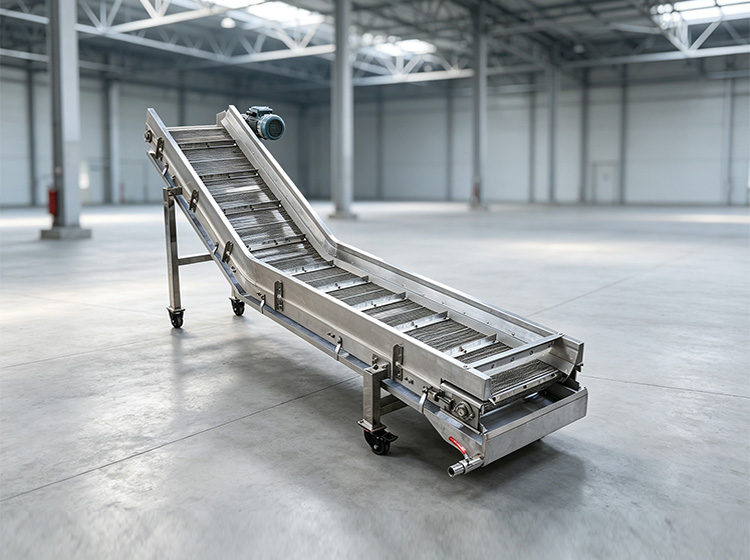
Blower: Transfers material produced by the extrusion puffing machine to the oven; blower height is freely adjustable according to oven height.

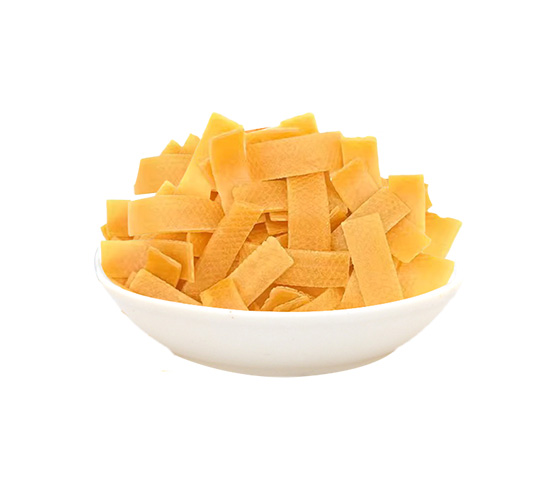
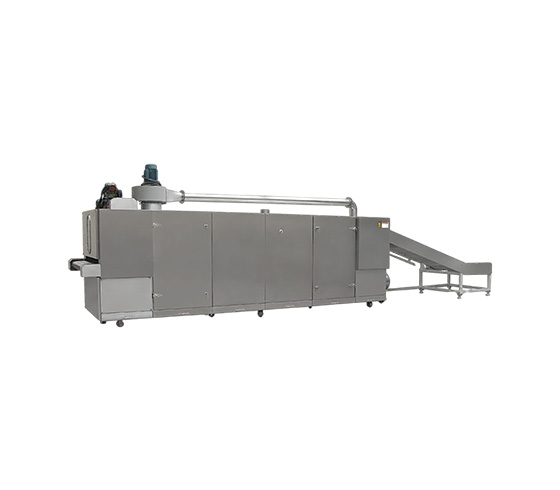
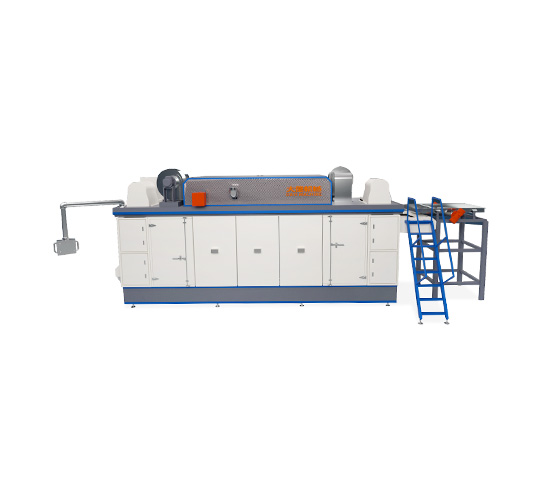
Three-layer electric oven: Bakes incoming products to remove moisture, rendering them crisp and dry.

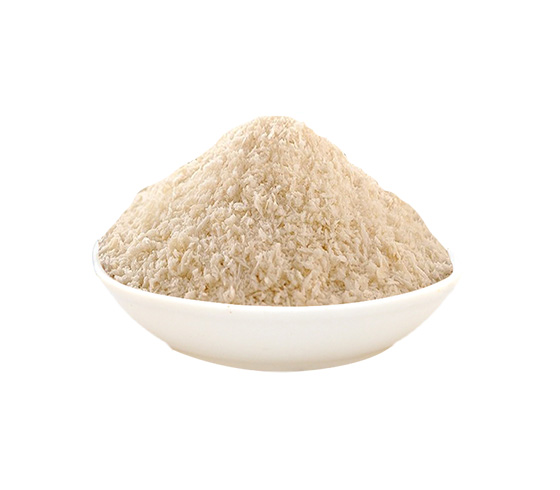
Ultrafine grinder: Grinds the baked product into various fineness levels according to production requirements.

Our nutritional powder production line offers diverse configurations, and its equipment production capacity can meet the requirements of various customers. Customers can select an appropriate production line based on their factory floor area and production needs. Below are the technical specifications of the extrusion puffing machine associated with this production line:

Model: SLG65-CJ; Installed Capacity: 57 kW; Power Consumption: 53 kW; Production Capacity: 100–160 kg/h; Dimensions: 1650 × 1150 × 2350 mm

Model: SLG70-A; Installed Capacity: 16 kW; Power Consumption: 55 kW; Production Capacity: 200–300 kg/h; Dimensions: 1750 × 1150 × 2350 mm

What conditions should be considered during implementation or selection?

First, the product type, raw material status, formulation direction, and expected finished product requirements must be clearly defined. For projects involving extrusion, forming, drying, frying, conveying, seasoning, or packaging, the processing capacity and cycle time of each stage must be matched to avoid inconsistencies between the capacity of individual equipment and the overall line requirements.

Secondly, the installation plan should be evaluated in conjunction with workshop space, power supply, water supply, steam or gas utility conditions. Equipment configuration should also consider long-term operational factors such as cleaning, maintenance, safety protection, spare parts availability, and operator training. Where process or equipment capabilities are mentioned in this document, they serve only as references for preliminary communication and assessment; specific models, power ratings, production capacities, temperatures, and time parameters shall be determined based on the formal technical proposal and confirmed through commissioning tests or on-site verification.

Frequently Asked Questions

Can the equipment be directly determined based on the standard configuration?

Not recommended. Different raw materials, product structures, target production capacities, and downstream processes will affect equipment configuration. It is more prudent to first confirm the product and process conditions, then conduct a configuration assessment.

How can I obtain more targeted advice?

It is recommended to prepare product images or sample information, raw materials and formulation direction, target production capacity, existing workshop conditions, and planned downstream equipment configuration. Dayi Machinery can then further discuss the applicable process route and equipment configuration range.

This article is compiled based on Dayi Machinery’s “Nutritional Powder Production Line Process Flow” documentation, intended to assist readers in understanding the relevant subject matter; for technical requirements pertaining to specific projects, the actual product documentation and engineering confirmation results shall prevail.