Talent Demand in the Food Machinery and Equipment Industry

Published:2026-07-18

The talent demand in the food machinery and equipment industry involves process, selection, and operational management issues related to food processing and production equipment.The actual solution should be confirmed based on raw material characteristics, target product specifications, production scale, and on-site conditions, and should not be determined solely by the parameters of a single piece of equipment.

Key Points of Talent Demand in the Food Machinery and Equipment Industry

In the food machinery and equipment manufacturing industry, talent has always been the top priority for development.China's food industry started relatively late but has developed rapidly, and it remains highly dependent on imported technologies and products. This has led to challenges for the machinery and equipment manufacturing sector, including a shortage of skilled personnel, limited comprehensive capabilities, and a lack of clear competitive advantages in the short term.In the early stages of development, the integration of industry, academia, and research was limited, and information channels between supply and demand sides were inadequate. Coupled with the rapid iteration of science, technology, and information industries, these practical issues led to shortages or gaps in professional, technical, and academic talent in China's food machinery manufacturing sector.Frontline production personnel in traditional manufacturing are largely experience-driven, making it difficult for them to adapt to the information-driven transformation of the modern internet era. The “logistics” issue has become a hidden concern for the industry.

Currently, the food machinery manufacturing industry is at a new inflection point in its development.New trends such as artificial intelligence, cloud computing, big data, and digitalization are driving the transformation and upgrading of the manufacturing industry, requiring enhanced levels of automation and intelligence, as well as improved comprehensive application capabilities for entire production lines or individual machines.Industrial upgrading, supply-side structural reform, and environmentally friendly production have established new benchmark standards for the manufacturing of food machinery.On the other hand, “Internet+”, social media marketing, and personalized customization are driving the deep integration of manufacturing with the information age.Therefore, the talent required by the food machinery manufacturing industry in the new era must embody the characteristics of this era: they must be pioneers of new trends such as the Internet, informatization, and digitalization, while also possessing the foundational technical expertise and professional theoretical knowledge of the mechanical equipment manufacturing industry, serving as seasoned “masters” of the field.

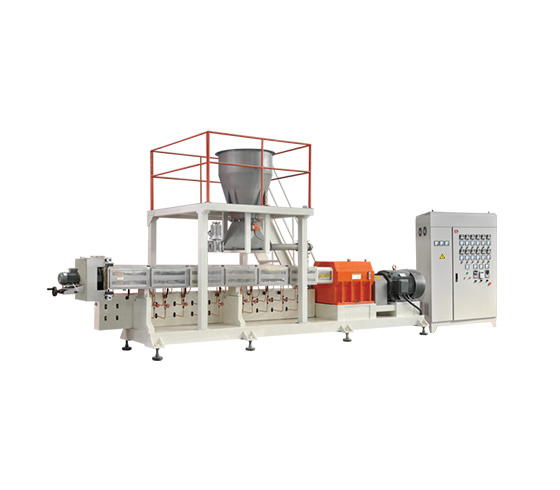
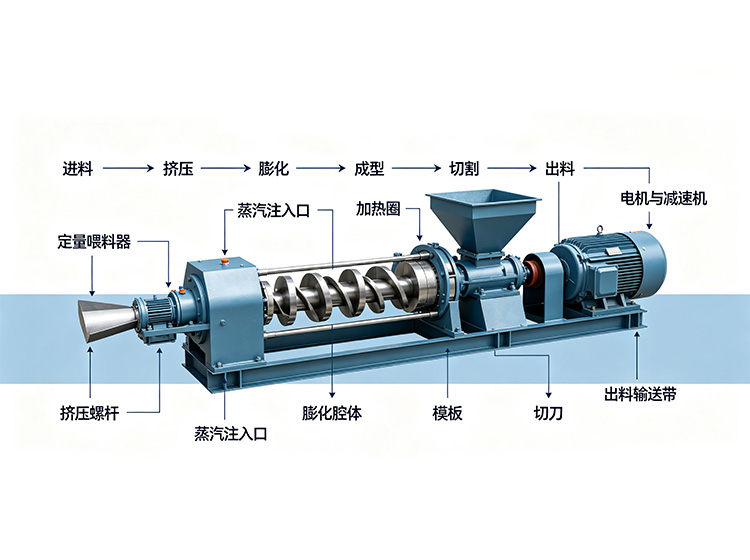
Talent cultivation is not achieved overnight, especially for the innovative talents urgently needed by the industry.To address this situation, enterprises must first drive internal reforms in their talent management mechanisms.Taking the puffed food machinery industry as an example, China’s puffed food machinery technology either follows historical traditions, relying on conventional equipment during production. This results in numerous process variables, making it difficult to achieve quantitative monitoring of safety and quality.Either directly introduce foreign technology.Clearly, this fails to meet the practical needs of modern production and daily life, so enterprises must accelerate the shift from talent development policies focused on experience-based skills to those emphasizing composite, multi-disciplinary competencies.Furthermore, accelerating information exchange between the supply and demand sides of manufacturing talent, promoting in-depth integration among industry, academia, and research, and strengthening learning and exchange between technical personnel in large enterprises and small and medium-sized enterprises have significant practical implications for talent development in the industry, enhancing the penetration of industry technology and academic influence, and serving as an important channel for the formation of new types of talent.

Finally, it is worth noting that food machinery manufacturers must keenly observe the new trends and developments in manufacturing and production in the new era, as well as the new opportunities and value brought by the Internet.This requires enterprises to focus on recruiting talent with information technology processing capabilities and online marketing skills, while simultaneously cultivating specialized professionals.By seizing the significant opportunity to transition from traditional manufacturing to intelligent manufacturing, actively exploring the application potential of smart technologies, and leveraging the advantages of modern management and promotion, we continuously enhance our core technological capabilities and comprehensive operational development.The journey ahead is long and arduous, but with perseverance, we will reach our destination.Amidst the coexistence of opportunities and challenges, as well as achievements and pressures, food machinery manufacturers must clearly define their positioning and significant responsibilities, aspiring to high ideals while remaining grounded in practical action.

What conditions should be considered during implementation or selection?

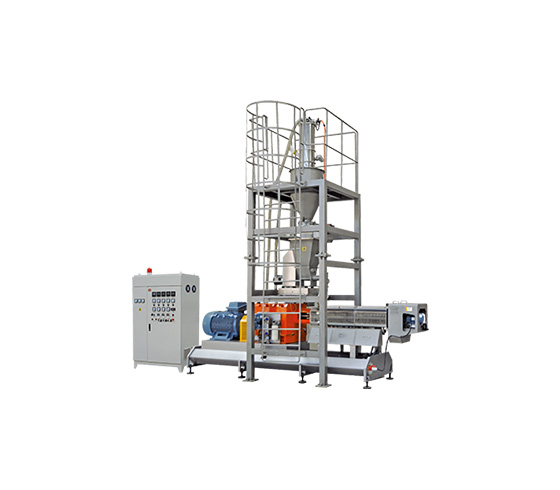
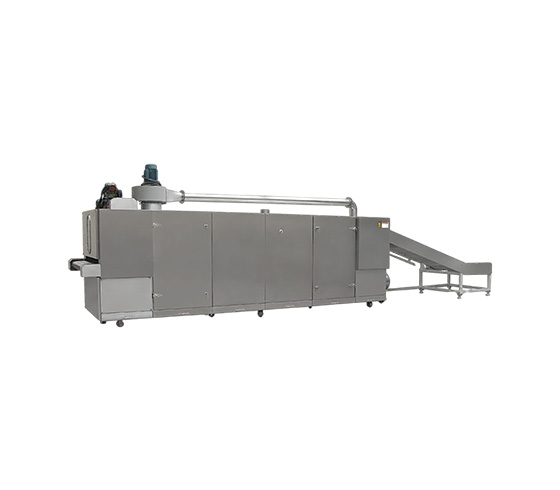
First, it is essential to clarify the product type, raw material state, formulation direction, and expected finished product requirements.For projects involving extrusion, forming, drying, frying, conveying, seasoning, or packaging, the processing capacity and cycle time of each stage must be matched to avoid discrepancies between individual equipment capacity and the overall line requirements.

Secondly, the installation plan should be evaluated in conjunction with the workshop's spatial layout and utility conditions, including power supply, water supply, steam, or gas.Equipment configuration should also take into account long-term operational factors such as cleaning, maintenance, safety protection, spare parts supply, and operator training.Any process or equipment capabilities mentioned in this document are for reference only in the context of solution discussions and preliminary assessments.Specific model numbers, power ratings, production capacities, temperatures, and times shall be subject to the official technical proposal and the results of trial runs or on-site verification.

Frequently Asked Questions

Can the equipment be determined directly based on the standard configuration?

Not recommended.The equipment configuration is influenced by different raw materials, product structures, target production capacities, and downstream processes.It is more prudent to confirm the product and process conditions before proceeding with the configuration assessment.

How to obtain more targeted advice?

It is recommended to prepare product images or sample information, raw material and formulation guidelines, target production capacity, existing workshop conditions, and planned downstream equipment configurations.Dayi Machinery can further discuss the applicable process routes and equipment configuration options based on this.

This article is compiled based on the document "Talent Demand in the Food Machinery and Equipment Industry" provided by Dayi Machinery, with the aim of helping readers understand the relevant topics.For technical requirements related to specific projects, please refer to the actual product documentation and engineering confirmation results.