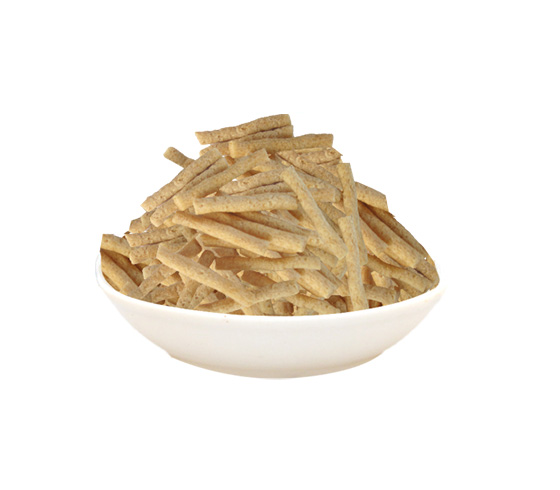
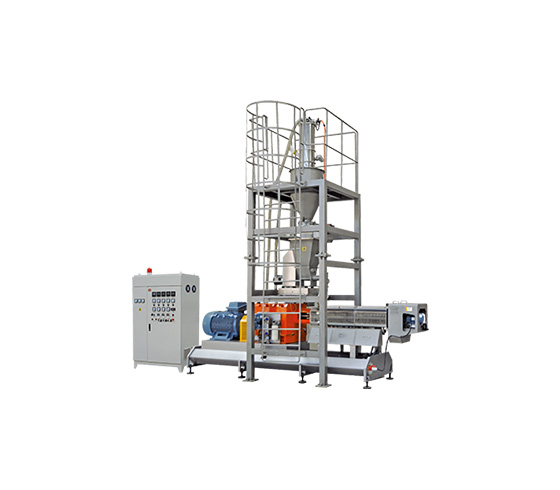
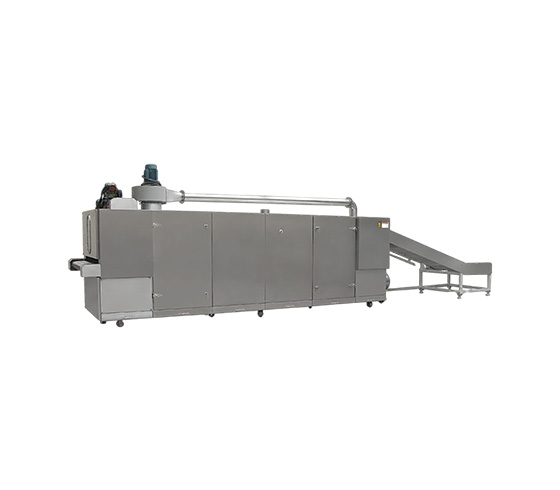
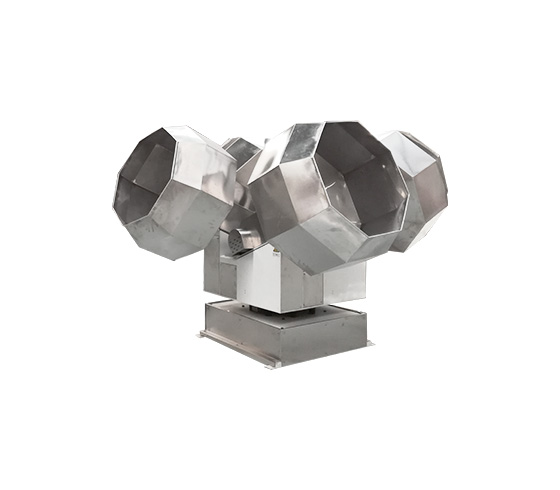
Importance of Fruit and Vegetable Crisping Equipment in Projects

Published:2026-07-18

The importance of fruit and vegetable crisping equipment in projects involves process, selection, or operational management issues related to food processing and production equipment.The actual solution should be confirmed based on raw material characteristics, target product specifications, production scale, and on-site conditions, and should not be determined solely by single equipment parameters.

Key Points on the Importance of Fruit and Vegetable Dehydration Equipment in Projects

In short, fruit and vegetable crisps are dehydrated fruit and vegetable products.Dehydrated foods are broadly categorized into three types: vacuum freeze-drying (FD), low-temperature hot-air drying (AD), and vacuum low-temperature oil-bath dehydration (VF).Fruit and vegetable crisps are produced using VF technology.

Because dehydration is carried out under vacuum conditions, the processing temperature is relatively low, thereby avoiding the destruction of food nutrients by high temperatures.This technology plays a crucial role in food processing, and its significance is fundamentally different from that of atmospheric-pressure frying.Its basic principle is to utilize three different physical phenomena of oil and water under reduced pressure conditions:

First, the boiling points of oil and water are reduced (oil is approximately 80°C, and water is approximately 40°C).

Second, after reaching the boiling point, water changes from a liquid to a gas, whereas oil behaves differently.

Third, oil and water have different specific gravities. Oil can displace moisture from materials at a higher boiling point, thereby rapidly dehydrating fruits, vegetables, and other materials in a short period of time.

Therefore, the vacuum low-temperature oil bath dehydration process has the following characteristics:

(1) Low-temperature processing, minimal nutrient loss

(2) Rapid moisture evaporation and short drying time

(3) It has a puffing effect on food, improving the product's rehydration properties.

(4) Extends the shelf life of the product.

Subject: The Importance of Fruit and Vegetable Crisping Equipment in ProjectsThe Importance of Process and Product Variety in the Project: 1) Process.After equipment selection and production commencement, the production process assumes a critical role.Some users attribute issues with finished products during production to the equipment, but this is not the case.For example, issues such as uneven chip shape, high oil content, lack of crispness, poor color, and weak original flavor can all be resolved through appropriate process adjustments.Of course, users should also adjust the process according to the requirements of end customers, as end customers in regions and countries such as Japan, South Korea, Taiwan (China), the United States, and mainland China have different product requirements, which need to be adjusted based on specific circumstances.

Subject: The Importance of Fruit and Vegetable Crisping Equipment in ProjectsThe Importance of Process and Product Variety in the Project: 2) Product Variety.The selection of raw material varieties is equally critical to the quality of the finished product.Generally, this project can process root vegetables and fruits with a moisture content below 85%. However, to produce high-quality fruit and vegetable crisps, strict variety selection is required.For example, sweet potatoes commonly use the 553 and 696 varieties;High-sugar apples (such as Red Fuji, Jonagold, etc.) cannot produce high-quality apple slices, whereas high-acidity apples (such as Red Star, McIntosh, Red Delicious, Qinguang, etc.) can yield aromatic, premium-textured apple crisps without the need for complex processing.Furthermore, the quality of greenhouse-grown vegetables is generally inferior to that of conventionally field-grown vegetables.Therefore, variety selection is also a key issue that users should focus on during the production process.

What conditions should be considered during implementation or selection?

First, it is essential to clarify the product type, raw material state, formulation direction, and expected finished product requirements.For projects involving extrusion, forming, drying, frying, conveying, seasoning, or packaging, the processing capacity and cycle time of each stage must be matched to avoid discrepancies between individual equipment capacity and the overall line requirements.

Secondly, the installation plan should be evaluated in conjunction with the workshop's spatial layout and utility conditions, including power supply, water supply, steam, or gas.Equipment configuration should also take into account long-term operational factors such as cleaning, maintenance, safety protection, spare parts supply, and operator training.Any process or equipment capabilities mentioned in this document are for reference only in the context of solution discussions and preliminary assessments.Specific model numbers, power ratings, production capacities, temperatures, and times shall be subject to the formal technical proposal and the results of trial runs or on-site verification.

Frequently Asked Questions

Can the equipment be determined directly based on the standard configuration?

Not recommended.Different raw materials, product structures, target production capacities, and downstream processes can affect the equipment configuration.It is more prudent to confirm the product and process conditions before proceeding with the configuration assessment.

How to obtain more targeted advice?

It is recommended to prepare product images or sample information, raw material and formulation guidelines, target production capacity, existing workshop conditions, and planned downstream equipment configurations.Dayi Machinery can further discuss the applicable process routes and equipment configuration options based on this.

This article is compiled based on the document “The Importance of Fruit and Vegetable Crisping Equipment in Projects” provided by Dayi Machinery, with the aim of helping readers understand the relevant topics.For technical requirements related to specific projects, please refer to the actual product documentation and engineering confirmation results.